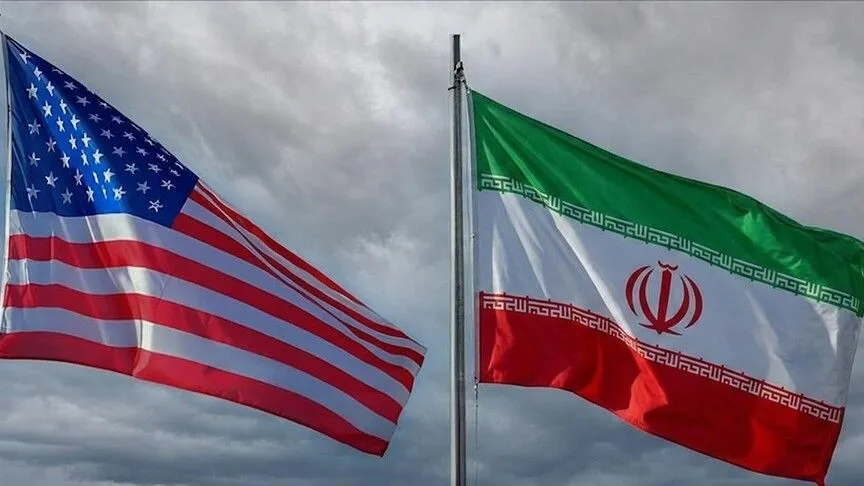
The three weeks between 1 and 22 November 2026 did not bring the United States and Iran back to full-scale war, nor did they bring the settlement that both capitals periodically claimed was within reach. Instead, the confrontation that began with the US–Israeli strikes of 28 February has settled into a hybrid condition: a closed Strait of Hormuz, a US counter-blockade of Iranian ports, intermittent "self-defence" strikes on Qeshm Island, a steady drumbeat of attacks on merchant shipping and a diplomatic channel run largely through Doha. The defining development of the period was a change in American strategy. Early in the month Washington appeared to be negotiating toward an interim deal; by mid-month President Trump had declared that the United States did not need one at all. This assessment traces how that shift happened, how Tehran answered it, and why the resulting equilibrium is less stable than it looks.
Timeline · 1–22 November 2026
From "progress" to pressure: the key moves
- 1 NOVVessel struck by an unknown projectile off Lima, Oman; crew safe.
- 2 NOVUS "limited, defensive" strikes on Qeshm Island after the IRGC fires on a US aircraft. The same day Trump says Iran "wants a settlement" and Brent falls 7.4%.
- 3 NOVUS midterm election day. Qatar says it is facilitating "real-time exchange of proposals" toward an interim deal; Tehran says the US response is "not convincing."
- 3 NOVIndian dhow MSV Al Jusufi hit off Oman; one seafarer killed. A tanker off north-east Oman is also hit.
- 7 NOVIRGC announces that Iran's self-imposed 2,000 km missile-range limit "has been lifted."
- 12–13 NOVTrump: "We don't need a deal with Iran. We've got their money." Rubio tells the G7 that economic means are achieving the same objective as combat.
- 13–17 NOVThree Iranian drone attempts on US installations in Bahrain in five days, all intercepted according to CENTCOM.
- 17 NOVOman hosts Araghchi in Muscat; Qatar warns of "extremely grave danger" to negotiations.
- 17 NOVUS "precision strikes" on an IRGC missile site on Qeshm.
- 19 NOVSenate rejects a war powers resolution 48–51. Trump: "I'm not rushing to make any decisions on Iran."
- 20–21 NOVThree tankers hit in or near Hormuz in two days; Iran says it shot down a US drone over Qeshm.
- 21 NOVIRGC missile and drone attack on US positions in Bahrain; a civilian industrial site catches fire. The US reports "no impacts" on its forces.
- 22 NOVGCC, UAE and Jordan condemn the attack; Bahrain asks the UN Security Council to enforce Resolution 2817.
Sources: CBS News live coverage, Al Jazeera, Tasnim, Stars and Stripes, NPR. Compiled by RCSGS.
The collapse of the interim-deal track
The month opened on a note of cautious optimism. On 2 November, the eve of the US midterm elections, Trump wrote that a deal "could happen" and that "Iran wants a settlement, as soon as possible." Vice President JD Vance, who had been leading the diplomatic track and had reportedly written directly to Iran's security chief Mohsen Rezaei, said "we've certainly made some progress." Markets took the signal seriously: Brent crude fell 7.4 per cent in a day to just over $105 a barrel. Qatar's foreign ministry spokesman Majed Al Ansari described Doha as "facilitating the real-time exchange of proposals" with the aim of an interim agreement, and a Qatari official told Reuters that mediators expected replies from both sides within thirty-six hours.
That optimism masked a structural gap that never closed. Tehran's position, repeated by Rezaei, by Foreign Ministry spokesman Esmaeil Baqaei and later by Foreign Minister Abbas Araghchi, is that Hormuz will reopen only after the United States addresses a package of conditions: an end to the war "on all fronts, including Lebanon," the unfreezing of Iranian assets, the lifting of oil sanctions and the end of the US counter-blockade of Iranian ports. Iran has also refused to discuss its nuclear programme until the blockade is lifted. Washington, for its part, wants what Trump calls a "permanent" deal that rules out an Iranian nuclear weapon, and has shown no willingness to concede on assets or sanctions first. On 3 November Rezaei called the American response "not convincing." The thirty-six-hour window passed without a breakthrough.
The decisive turn came around 12 November. In a post on Truth Social, Trump wrote: "We don't need a deal with Iran. We've got their money." The same post directed Vance to concentrate on domestic priorities, effectively ending the diplomatic track he had led. Secretary of State Marco Rubio, speaking at the G7 foreign ministers' meeting in Paris, supplied the doctrine: "The President has concluded that for the time being there is no need for major combat operations because we're achieving the same objective by economic means." The United States had moved from bargaining to strangulation, betting that a blockaded, sanctioned Iran with its overseas funds frozen would eventually concede more than it would at the table today.
Positions compared
Two theories of victory
Washington
Goal. A "permanent" deal that prevents an Iranian nuclear weapon.
Method. Naval counter-blockade, sanctions and frozen assets; limited "self-defence" strikes.
Timeline. Open-ended. Trump says he can wait until the new year.
Bet. Economic pressure will force concessions before Gulf patience or oil markets break.
Tehran
Goal. End of the war on all fronts, unfrozen assets, sanctions relief, lifting of the blockade.
Method. Keep Hormuz closed to uncoordinated shipping; pressure US bases and Gulf hosts.
Timeline. No nuclear talks until the blockade ends; Hormuz talks "pointless" until demands are met.
Bet. Rising costs to Gulf states and energy markets will push Washington to concede first.
Based on public statements by Trump, Rubio, Vance, Araghchi, Rezaei and Baqaei, 2–21 November 2026.
Tehran's answer: range, reach and attrition
Iran's response to the shift in American posture was to demonstrate that waiting would carry a price. On 7 November the IRGC spokesman, Brigadier General Hossein Mohebbi, announced that the 2,000 km range limit Iran had long described as self-imposed "has been lifted," following a directive attributed to Supreme Leader Mojtaba Khamenei that any threat would be met with a response "without geographic limits." The announcement did not reveal a new long-range system, and its practical significance is uncertain. Its political significance is clearer. A self-imposed cap was one of the few restraints Tehran could still trade in negotiations, and removing it unilaterally signals that Iran now sees more value in deterrence by ambiguity than in confidence-building. On 21 November the IRGC reinforced the message by unveiling a new launcher for liquid-fuelled missiles.
On the ground, Iranian pressure concentrated on Bahrain, home to the US Fifth Fleet. Between 13 and 17 November the IRGC made three attempts against US installations there in five days; CENTCOM said all were intercepted and dismissed Iranian claims of a hit on a radar at Sheikh Isa Air Base as "FALSE." The fourth attempt, on 21 November, was larger: a combined missile and drone attack that the IRGC said targeted US positions at Riffa and Awali and struck two Patriot radars. A US official said there were "no impacts" on American forces, but Bahrain's interior ministry reported a fire at a civilian industrial facility. That detail matters more than the competing damage claims. It shows the confrontation spilling onto the territory and economy of a host state, which is precisely the pressure point Tehran wants to exploit.
Maritime incidents · 1–21 November
The strait stays shut: reported attacks on shipping
Sources: UKMTO via CBS News; ISNA and Tasnim for Iranian claims. Not an exhaustive count. The US says the southern lanes have been de-mined and disputes Iranian mine claims.
At sea, the pattern was attrition rather than spectacle. Iran's navy restated on 17 November that the strait "is closed" to ships that do not coordinate with Iranian forces, and the record above shows incidents clustering in the final week of the period. Whether the damage comes from mines, as Tehran claims, or from projectiles, as UKMTO reports, the effect is the same: insurers, shipowners and crews are reminded daily that the American escort and de-mining effort has not restored normal passage. Washington answered with two rounds of strikes on Qeshm Island, on 2 and 17 November, each described as limited and defensive. Iran said it had shot down a US drone over the island on 21 November. Neither side has crossed into the sustained bombing campaigns of the spring, but the threshold is being tested more often.
Markets, money and the cost of waiting
The American strategy rests on the claim that time is on Washington's side. The energy data from the period complicate that claim. Brent has traded in a band of roughly $70 to $120 a barrel since just before the war, and remains around 40 per cent above pre-war levels. Saudi Aramco's third-quarter results, released on 3 November, showed an average realised price of $95.20, a windfall for producers that can still export, but a heavy tax on importers in Asia and Europe. Every tanker struck in the strait pushes the risk premium back up, and the Houthi campaign against Saudi Arabia, including claimed strikes on East-West pipeline pumping stations, threatens the main bypass route for Gulf crude.
Oil · Brent crude, US$ per barrel
A war premium that has not gone away
Sources: AP via CBS News (trading range and 2 November close); Saudi Aramco Q3 2026 results. Bars scaled to $120.
The pressure is also political. On 19 November the Senate rejected a House-passed war powers resolution by 48 to 51, with three Republicans voting in favour. The margin is narrow enough to show that congressional patience is not unlimited. In Israel, the October election failed to produce a clear majority and Gadi Eisenkot, tasked with forming a government, warned that "we are in very dangerous territory." Meanwhile CBS reported on 20 November that the United States and Israel were weighing a new military assault in the short term, even as Trump publicly insisted he was "not rushing." The administration is therefore running two messages at once: strategic patience for markets and allies, and the credible threat of renewed force for Tehran. That ambiguity may be deliberate, but it also makes it harder for mediators to know what Washington will accept.
Mediators without a mandate
Qatar remained the central channel throughout the period. After hosting two rounds of talks with Iranian officials in late October, Doha pushed for an interim arrangement in early November, and a Qatari delegation held two hours of talks in Tehran on 20 November. Oman reopened its own track when Foreign Minister Badr Albusaidi received Araghchi in Muscat on 17 November to discuss "diplomatic options" for the strait. Egypt urged Iran to show "flexibility," and Pakistan, host of the spring negotiations, remains a co-mediator. Trump said he discussed Iran's nuclear programme with Xi Jinping and Vladimir Putin at their Shenzhen meeting on 19 November, but also that he had no need to ask China or Russia for help.
The problem for the mediators is that the American shift to economic pressure removed the urgency that drives interim deals. When Washington says it does not need an agreement, Tehran has little reason to make early concessions, and Doha and Muscat are left passing messages between parties that both believe time favours them. The Gulf states hosting American forces bear the most immediate risk. The Bahrain attack of 21 November, followed by Bahrain's appeal to the UN Security Council to enforce Resolution 2817, shows that the hosts are beginning to treat the confrontation as their own security crisis rather than a bilateral dispute they can wait out.
Outlook: four paths from here
The current equilibrium depends on three assumptions holding at once: that Iranian attacks stay below the level that would force a large American response, that American strikes stay limited enough not to trigger Iranian escalation against Gulf energy infrastructure, and that oil markets can absorb a closed strait indefinitely. None of these is secure. The scenarios below reflect RCSGS's assessment of the likeliest paths over the next eight weeks.
Scenarios · to mid-January 2027
Where the standoff could go
Armed stalemate continues
Blockade and counter-blockade persist; periodic tanker strikes and limited US strikes on Qeshm; Qatar keeps the channel open without a deal.
Renewed major strikes
A lethal hit on US personnel or a Gulf energy site triggers the US–Israeli assault reportedly under consideration, ending the de facto truce.
Limited Hormuz arrangement
A phased reopening of the strait traded for partial easing of the port blockade, with nuclear and asset questions deferred.
Comprehensive settlement
The "permanent" deal Trump seeks, covering nuclear limits, sanctions and assets. The gap between the two sides' conditions remains too wide.
RCSGS assessment. Meters show relative likelihood, not precise probabilities.
The most likely outcome is that the standoff continues much as it has in November: a closed strait, an American blockade, and a slow contest over who tires first. The greatest danger lies in the second path. With Iran's missile-range cap gone, attacks on Bahrain growing in scale and tankers being struck almost daily, the margin for error has narrowed. A single strike that kills American personnel or disables a major Gulf facility would very likely end the period of "no war, no peace" that both capitals currently find tolerable. For the wider world, the lesson of these three weeks is that a war does not need daily bombing to keep imposing costs. Energy importers, Gulf host states and global shipping are paying for the stalemate now, whatever its eventual outcome.