This past week may be remembered as the moment the June ceasefire between the United States and Iran finally fell apart. In the space of seven days, the two sides went from an uneasy truce to near-nightly air strikes. Iran fired missiles and drones at half a dozen Gulf states, the Strait of Hormuz was effectively closed to commercial shipping, and President Donald Trump declared the ceasefire "over" — then, on Monday, announced that the United States would reinstate a blockade of Iranian ships and act as the strait's self-appointed "guardian." Oil prices rose, and a peace deal that had looked within reach only a month ago now feels like a relic of a calmer moment.
What follows is a plain account of how the week unfolded, what Trump actually said, what happened on the ground today, and what it all adds up to.
How the week unfolded
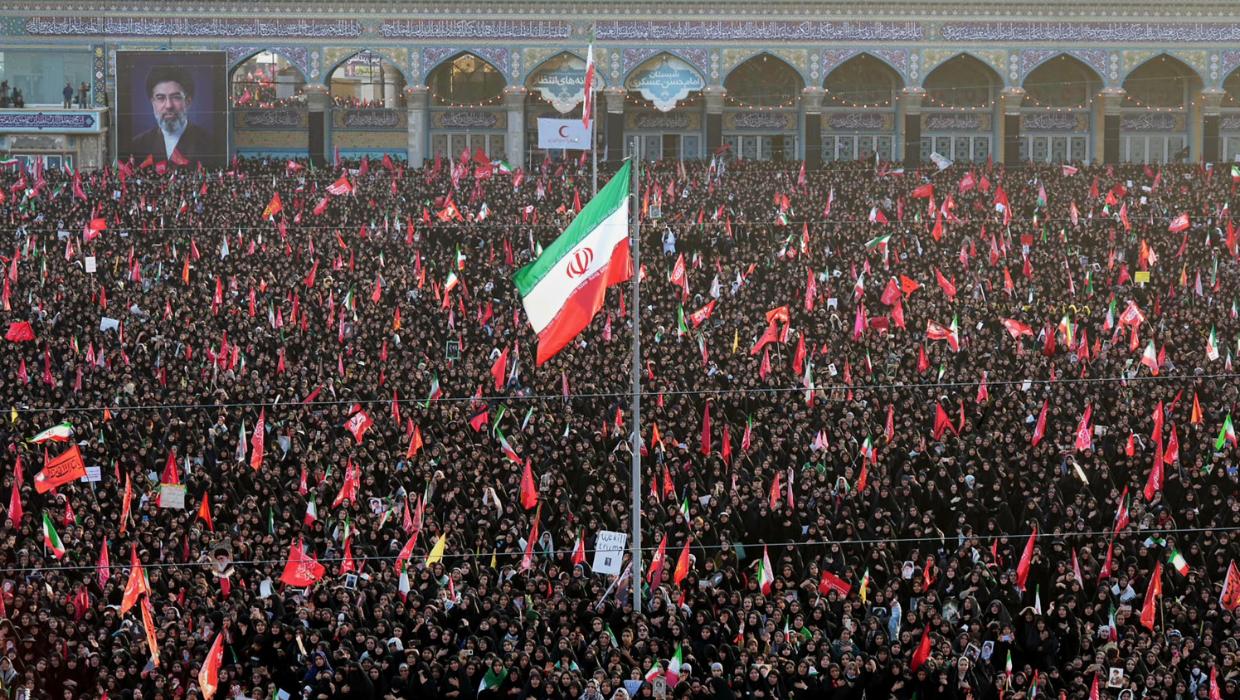
The spark came during what was supposed to be a period of calm. The funeral of Iran's late Supreme Leader, Ayatollah Ali Khamenei, ran through the first week of July, and Washington had treated it as an informal pause in the fighting. Instead, Iranian forces used the window to attack commercial vessels in the Strait of Hormuz. The United States answered with more than eighty strikes on Iranian targets, including the Kharg Island oil terminal and the ports at Bandar Abbas, Sirik and Qeshm. From there, the week became a fast back-and-forth in which each side hit harder than the last.
By 9 July the exchanges had widened dramatically. Iran launched one of its broadest salvos of the war, firing ballistic missiles and drones not only at a U.S. base in northern Jordan but also at Bahrain, Kuwait and — for the first time in this conflict — Qatar. Gulf air defenses intercepted much of the incoming fire, but not all of it, and the strikes made clear that Iran was willing to put the territory of America's Gulf partners directly in play. The United States responded with successive waves of strikes, hitting around 140 Iranian military sites in a single night and more than 300 targets across three nights.
The pattern held into the weekend. After an attack on a Cyprus-flagged container ship, the U.S. carried out what was by then its fourth strike package in a week and bombed Iran on two consecutive nights. By Sunday, Iran declared the Strait of Hormuz closed "until further notice." U.S. Central Command rejected the claim, insisting the waterway was still passable, but in practice commercial traffic had already dried up. The disagreement over whether the strait is open or closed has itself become part of the standoff.
What Trump said
President Trump's language hardened steadily over the week, and his statements are worth reading closely because they set the tone for everything else. Midweek, wrapping up a NATO summit in Ankara, he declared the ceasefire finished and made no attempt to soften it. "I don't want to deal with them anymore," he said of Iran's leaders. "They're scum."
On Friday he put the position in writing. "The Islamic Republic of Iran has asked us to continue 'talks,'" he wrote on Truth Social. "We have agreed to do so, but the United States has stated to them, in no uncertain terms, that the cease fire is OVER." It was a deliberately mixed message: the door to negotiations left open, but the truce itself declared dead. Trump added that he had little faith any talks could produce a credible deal, even as he allowed his negotiators to keep talking.
Then, on Monday, he escalated again — this time rhetorically raising the stakes over the strait itself. Trump said the United States would reinstate a blockade of Iranian ships in the Strait of Hormuz, describing the U.S. role as that of a "guardian" of the waterway and suggesting that other ships could be charged for passage. The irony was hard to miss. Controlling transit and collecting fees was precisely the leverage Iran had been trying to seize for itself; Trump's answer was to claim that role for the United States instead. Whether Washington can actually enforce such a blockade — and how Iran responds if it tries — is now one of the central questions of the conflict.
Today's fighting
Overnight into Monday, 13 July, the two sides traded fresh strikes yet again. U.S. Central Command said American forces had carried out another round of attacks aimed at degrading Iran's ability to threaten shipping, hitting dozens of targets that included Iranian air-defense systems, coastal radar sites, and missile and drone facilities. The choice of targets fits a clear logic: knock out the sensors and launchers Iran needs to menace the strait, and the strait becomes easier to reopen by force.
Iran hit back across the Gulf. According to Iranian state media, its strikes targeted U.S. military bases in Kuwait, Bahrain, Jordan, Oman and Qatar — an even wider spread than the salvo a few days earlier, and a sign that Tehran intends to keep raising the cost of America's regional presence rather than absorb strikes quietly. Markets reacted immediately. Brent crude for September delivery rose about 2.8 percent on Monday morning to around $78 a barrel, as traders once again priced in the risk that a fifth of the world's oil could be caught in the crossfire.
What it all means
The plainest conclusion is that the June ceasefire is over in everything but the paperwork. The interim deal signed last month was meant to reopen the Strait of Hormuz and give the two sides sixty days to negotiate a lasting settlement. A week of nightly strikes and a closed strait have overtaken it. The one thread still holding is that both sides say they are willing to keep talking — but talking while bombing is a fragile arrangement, and Trump himself has said he doubts it will lead anywhere.
It is also striking how little either side is truly winning. The United States can strike Iran almost at will and has clearly hurt its military infrastructure, yet it has not achieved the one thing it says it wants: a safe, open strait. Iran cannot match American firepower and is watching its ports and oil facilities get pounded, yet it has kept the strait shut and dragged five Gulf states into its line of fire. Each side is imposing heavy costs on the other without forcing a decision. That is the recipe for a grinding stalemate rather than a quick resolution.
The most worrying feature of the week is how far the fighting has spread beyond Iran and the United States. By striking Kuwait, Bahrain, Jordan, Oman and Qatar, Iran has turned the Gulf's smaller states into targets, and every such strike raises the chance that one of them is pulled fully into the war or that a stray missile causes a mass-casualty event that forces a sharp escalation. Trump's blockade announcement pushes in the same direction: if the U.S. Navy begins stopping or charging ships in the strait, the odds of a direct naval clash go up.
For now, the safest thing to say is that the war has returned to a dangerous rhythm, the diplomacy is on life support, and the Strait of Hormuz — and the price of oil that flows through it — will keep the rest of the world anxiously watching. The decisions that matter most this week are being made not in the markets but in Tehran, Washington and the Gulf capitals now within range of Iran's missiles.