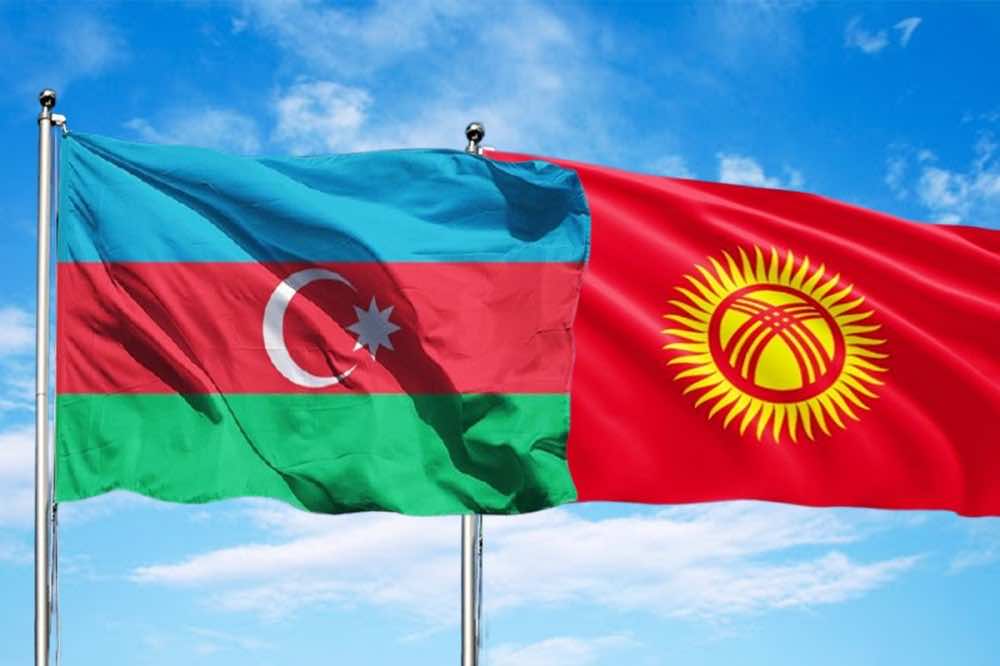
The economic relationship between Kyrgyzstan and Azerbaijan is entering a new phase. Long characterized by shared cultural heritage, linguistic affinity, and cooperation within Organization of Turkic States (OTS) institutions, bilateral ties are increasingly being driven by investment, infrastructure development, and regional connectivity. As Eurasian trade routes undergo profound transformation, both countries are positioning themselves to capitalize on new logistics corridors linking China, Central Asia, the Caucasus, and Europe.
The establishment and rapid expansion of the Azerbaijan-Kyrgyz Development Fund (AKDF), combined with the construction of the China–Kyrgyzstan–Uzbekistan (CKU) railway and the development of the Trans-Caspian International Transport Route (Middle Corridor), demonstrate that relations between Bishkek and Baku are moving beyond symbolic diplomacy toward practical economic integration. Nevertheless, the long-term success of this partnership will depend not only on financial resources but also on institutional reforms, infrastructure modernization, and the ability of both countries to respond to an increasingly competitive geopolitical environment.
A New Investment Model in the Region
Unlike traditional donor assistance or commercial lending, the Azerbaijan-Kyrgyz Development Fund represents an innovative mechanism for bilateral economic cooperation. Established in 2022 with an initial capital of $25 million and expanded to $100 million in 2024, the fund reflects Azerbaijan's growing confidence in Kyrgyzstan's economic potential. Its operating model is particularly noteworthy. Instead of providing loans secured by collateral, the fund acts as an equity investor, financing up to 49 percent of project costs while sharing investment risks with local businesses. Such an approach encourages entrepreneurship, reduces financial barriers for domestic companies, and aligns the interests of investors and project developers. This model also signals a shift in regional investment philosophy. Rather than relying exclusively on state-to-state financing or international financial institutions, countries are increasingly creating bilateral investment vehicles tailored to shared strategic interests. For Kyrgyzstan, this mechanism provides access not only to capital but also to managerial expertise, technological know-how, and international business networks. For Azerbaijan, it offers an opportunity to diversify overseas investments while strengthening its economic footprint in Central Asia.
Diversification Beyond Infrastructure
One of the most significant features of Azerbaijani investment in Kyrgyzstan is its sectoral diversity. Current projects span renewable energy, manufacturing, tourism, healthcare, agriculture, and logistics. This diversification reduces dependence on any single industry while contributing to broader economic resilience. The construction of small hydropower plants in Issyk-Kul and Osh regions addresses Kyrgyzstan's persistent electricity shortages and supports national efforts to expand renewable energy generation. Given the country's growing demand for electricity and seasonal power deficits, such projects have both economic and strategic significance. Meanwhile, investments in manufacturing—including the country's first carpet factory and a modern garment production facility—illustrate an emphasis on value-added production rather than merely extracting raw materials. These projects generate employment, strengthen domestic supply chains, and enhance export potential. The healthcare sector also stands to benefit. Financing a modern cardiology center in Osh addresses regional disparities in access to specialized medical services while creating highly skilled employment opportunities.
Agriculture represents another promising area. The establishment of a logistics center for sea buckthorn processing demonstrates the growing recognition that competitiveness in agricultural exports depends not only on production but also on storage, processing, certification, and logistics. Collectively, these projects suggest that Azerbaijan's investment strategy in Kyrgyzstan aims to foster long-term economic development rather than short-term financial returns.
Connectivity as the New Strategic Currency
Perhaps the most transformative element of bilateral cooperation lies not in individual investment projects but in regional transport connectivity. The China–Kyrgyzstan–Uzbekistan railway has the potential to fundamentally reshape Eurasian trade patterns. For decades, Central Asian transport routes have largely depended on northern corridors passing through Russia. However, geopolitical tensions, sanctions, and supply chain disruptions have accelerated interest in alternative routes connecting East Asia with Europe. Within this evolving landscape, the CKU railway represents a missing link connecting western China to Central Asia. Yet the railway's true strategic value extends beyond Kyrgyzstan. Once connected with the Trans-Caspian International Transport Route, freight originating in China could move through Kyrgyzstan and Uzbekistan before crossing the Caspian Sea to Azerbaijan and continuing via Georgia and Türkiye into European markets. Such integration would significantly enhance Azerbaijan's role as a logistics hub while providing Kyrgyzstan with its first efficient overland connection to European markets independent of traditional northern routes. Rather than competing with existing corridors, the CKU railway and the Middle Corridor are increasingly viewed as complementary components of a more diversified Eurasian transport architecture.
Azerbaijan's Expanding Geoeconomic Role and Opportunities for Kyrgyzstan
Azerbaijan's growing engagement in Central Asia reflects broader changes in its foreign economic policy. Historically recognized primarily as an energy exporter, Azerbaijan has steadily transformed itself into a regional logistics center. Massive investments in ports, railways, customs modernization, and digital infrastructure have positioned the country as a key gateway between Asia and Europe. Its active promotion of the Middle Corridor reflects a deliberate strategy to capitalize on shifting global trade flows. From this perspective, investment in Kyrgyzstan serves several strategic objectives simultaneously.
First, it strengthens Azerbaijan's economic presence in Central Asia.Second, it increases future freight volumes passing through Azerbaijani transport infrastructure. Third, it deepens political partnerships within the Turkic world. Finally, it supports Azerbaijan's ambition to become a central node in emerging Eurasian supply chains.For Kyrgyzstan, the benefits extend well beyond foreign direct investment.Improved transport connectivity could reduce export costs, improve access to new markets, and attract additional investors seeking production sites along emerging trade corridors.Manufacturing industries such as textiles, food processing, construction materials, and agricultural exports stand to benefit from shorter delivery times and expanded market access.Moreover, closer integration with Azerbaijan offers Kyrgyz businesses improved access to the Caucasus, Türkiye, and European consumers.The opening of the Kyrgyz Trade House in Baku represents an important institutional step in promoting national products abroad. However, expanding exports will require improvements in product quality, certification, packaging, and compliance with international standards.Infrastructure alone cannot generate trade if producers remain unable to compete internationally.
Challenges That Cannot Be Ignored
Despite considerable optimism, several structural challenges remain.
Transport infrastructure within Kyrgyzstan still requires significant modernization. Efficient logistics depend not only on railways but also on roads, border crossings, customs procedures, and digital trade systems.
Administrative barriers continue to discourage investors. Lengthy bureaucratic procedures, regulatory uncertainty, and inconsistent enforcement of business legislation remain common concerns among foreign companies.
Market size presents another limitation. Kyrgyzstan's relatively small domestic market means that investment projects must increasingly be designed with export potential in mind.
There is also growing regional competition.
Kazakhstan, Uzbekistan, Georgia, and Türkiye are simultaneously investing heavily in logistics infrastructure and competing to attract transit flows associated with the Middle Corridor.
Success will therefore depend not only on geographic location but also on efficiency, reliability, and competitive transport costs.
Beyond Economics: Strategic Implications
The expanding partnership between Kyrgyzstan and Azerbaijan carries important geopolitical implications. Economic interdependence strengthens political trust while reducing vulnerabilities associated with dependence on any single external partner.Within the framework of the Organization of Turkic States, practical economic cooperation increasingly complements cultural and political dialogue.
Moreover, regional investment funds such as the AKDF demonstrate how middle powers can create new mechanisms for South-South cooperation without relying exclusively on traditional Western financial institutions or major global lenders.
This reflects a broader trend toward regional solutions to regional development challenges.
The partnership between Kyrgyzstan and Azerbaijan is evolving from symbolic friendship into a multidimensional strategic relationship centered on investment, infrastructure, and connectivity. The Azerbaijan-Kyrgyz Development Fund has emerged as an effective instrument for financing productive sectors of the economy, while the China–Kyrgyzstan–Uzbekistan railway and the Middle Corridor could fundamentally alter both countries' positions within Eurasian trade networks. Yet infrastructure and investment alone will not guarantee success. Realizing the full potential of this partnership requires continued regulatory reforms, improvements in the investment climate, efficient logistics, and stronger support for export-oriented industries. If these conditions are met, Kyrgyzstan and Azerbaijan could become not merely participants in emerging Eurasian transport corridors but important architects of a more connected, diversified, and economically integrated region.