Introduction
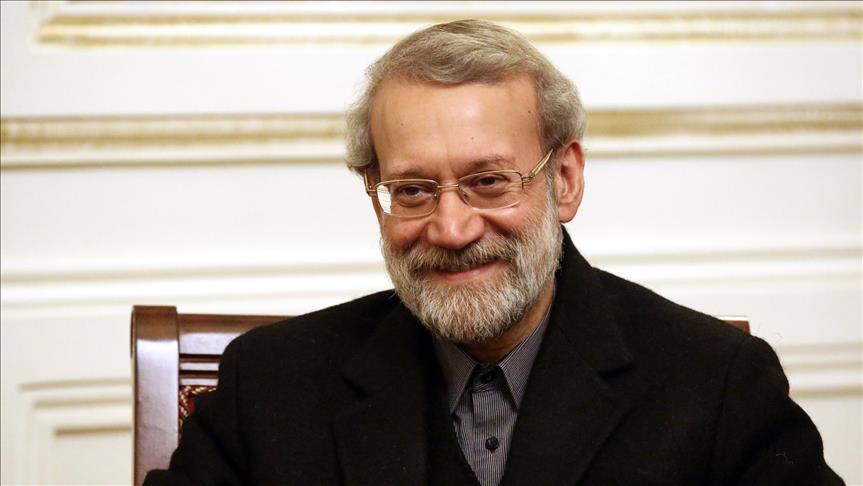
The reported killing of Ali Larijani marks one of the most consequential leadership strikes against the Islamic Republic in recent decades. Coming in the aftermath of Ayatollah Ali Khamenei’s death and amid sustained targeting of senior Islamic Revolutionary Guard Corps (IRGC) figures, this event appears, at first glance, to represent a decisive blow to Iran’s governing structure. Larijani was not merely another senior official; he was a rare figure who combined institutional memory, political authority, and operational experience across multiple domains of the state.
Yet, while the tactical significance of his elimination is undeniable, its strategic implications are far more complex. The removal of Larijani does not automatically translate into systemic collapse. Rather, it exposes the tension between two competing dynamics: on one hand, the degradation of coordination and political flexibility within the regime; on the other, the demonstrated resilience of a deeply institutionalized system designed to absorb such shocks. Understanding this duality is essential to assessing what comes next for Iran and the broader Middle East.
Larijani as a System Integrator
Ali Larijani occupied a unique position within the architecture of the Islamic Republic. Over four decades, he operated at the intersection of the military, political, and religious spheres, serving as a bridge between the IRGC, the clerical establishment, and the formal institutions of governance. Few figures possessed his ability to navigate these overlapping centers of power while maintaining credibility across factions.
His role in recent months reflected this integrative function. Following his appointment as Secretary of the Supreme National Security Council (SNSC) after the June war, Larijani emerged as a central coordinator of Iran’s wartime posture. He was involved not only in shaping strategic responses but also in managing the political and diplomatic dimensions of the conflict. In practice, this meant translating broad strategic directives into coherent policy, aligning messaging, and maintaining channels—however limited—for external communication.
At a time when the regime faced simultaneous internal unrest and external military pressure, Larijani’s value lay in his capacity to impose coherence on a fragmented system. He was neither purely a hardliner nor a reformist, but rather a pragmatic operator capable of balancing competing priorities. This ability made him both an asset to the regime and, arguably, a target for those seeking to constrain its adaptability.
The Immediate Impact: Coordination Loss Without Paralysis
The elimination of such a figure inevitably creates disruption. Larijani’s absence removes a key node in the regime’s decision-making network, particularly in terms of coordination between political leadership, security institutions, and diplomatic signaling. In wartime conditions, where timing, messaging, and internal alignment are critical, this loss is significant.
However, it is equally important to recognize what his death does not do. The Islamic Republic is not a system centered on a single individual outside the Supreme Leader. Decision-making authority is distributed across a network of institutions, including the SNSC, the presidency, parliament, the judiciary, and, most critically, the IRGC. This layered structure has been deliberately designed to ensure continuity in the face of leadership losses.
Historical precedent reinforces this point. The regime has repeatedly demonstrated its ability to absorb the elimination of senior figures, particularly within the IRGC, without experiencing systemic breakdown. Contingency planning, leadership dispersion, and predefined succession mechanisms all contribute to this resilience. As such, while Larijani’s death creates a coordination deficit, it is unlikely to paralyze Iran’s strategic posture or its ability to prosecute the ongoing war.
Elite Reconfiguration and the Rise of Security Actors
Where the impact of Larijani’s removal becomes more pronounced is at the level of elite politics. He belonged to a shrinking cohort of experienced insiders capable of navigating between different currents within the system. His presence helped maintain a degree of balance between political pragmatists and more ideologically rigid or security-oriented factions.
With his departure, this balance is likely to shift. The process of appointing a successor to the SNSC will serve as a key indicator of the emerging power configuration. While formally the prerogative of the president, such appointments are, in practice, determined by the Supreme Leader and influenced heavily by the IRGC. Figures associated with a more hardline outlook, such as Saeed Jalili, may gain prominence, reflecting a broader trend toward the securitization of governance.
Simultaneously, other actors stand to benefit from the resulting vacuum. Individuals such as Mohammad Bagher Ghalibaf, with strong ties to both the IRGC and the political establishment, may consolidate their positions as central power brokers. The removal of Larijani also eliminates a figure who reportedly opposed certain leadership trajectories, including the potential rise of Mojtaba Khamenei, thereby facilitating further consolidation at the top.
The net effect is not chaos in the immediate sense, but rather a reconfiguration of elite dynamics in favor of actors who prioritize security considerations over political flexibility.
Radicalization and the Narrowing of Strategic Options
One of the most significant long-term implications of Larijani’s elimination lies in its potential to accelerate the hardening of the regime. Figures like Larijani, despite their involvement in repression and coercive policies, often play a crucial role in maintaining channels for negotiation and managing escalation. Their pragmatism does not equate to moderation in a liberal sense, but it does provide the system with a degree of strategic elasticity.
Removing such figures risks narrowing the range of policy options available to the leadership. As more ideologically rigid or security-driven actors assume greater influence, the likelihood of compromise diminishes. This dynamic aligns with a broader pattern observed in decapitation strategies: while they may weaken certain aspects of governance, they can also produce more radicalized and less predictable leadership structures.
From the perspective of external actors, this creates a strategic paradox. Efforts to degrade the regime’s capabilities and limit its maneuverability may simultaneously reduce the prospects for diplomatic engagement. In this sense, the elimination of Larijani could complicate, rather than facilitate, any future political settlement.
Narratives of Survival and Cohesion
Another important dimension is the internal narrative that such strikes reinforce. The targeting of senior leadership figures can be framed by the regime as evidence of an existential external threat. This, in turn, can strengthen arguments for internal unity and justify further consolidation of power within security institutions.
Rather than generating immediate fragmentation, such dynamics often produce short-term cohesion, particularly within elite circles. While underlying tensions and rivalries persist, they are temporarily subordinated to the perceived need for regime survival. Over time, however, the erosion of experienced intermediaries like Larijani may exacerbate these tensions, leading to more pronounced factional competition.
Limits of Decapitation as a Strategy
The broader question raised by Larijani’s elimination concerns the effectiveness of decapitation strategies in achieving systemic change. Evidence from other contexts suggests that such approaches have inherent limitations, particularly when applied to deeply institutionalized and ideologically driven systems.
The Islamic Republic is not a loosely organized network but a state with entrenched institutions, established chains of command, and a capacity for adaptation. While leadership losses can degrade performance and create inefficiencies, they rarely produce immediate collapse. Instead, they tend to trigger processes of replacement, consolidation, and, in some cases, radicalization.
Moreover, targeted killings do not generate alternative political leadership for opposition forces. In the absence of a viable internal or external alternative, the removal of regime figures may alter the composition of the elite without fundamentally changing the structure of power.
Conclusion
The reported killing of Ali Larijani represents a significant moment in the ongoing conflict between Iran and its adversaries. It removes a highly experienced and influential insider who played a critical role in coordinating the political, strategic, and diplomatic dimensions of the regime’s response to crisis. In doing so, it weakens an important mechanism of internal coherence and reduces the system’s capacity for flexible decision-making.
At the same time, the Islamic Republic’s underlying structure remains intact. Its multi-layered decision-making processes, institutional depth, and prior preparation for leadership losses ensure continuity in the face of such shocks. The immediate impact is therefore one of disruption rather than paralysis.
The longer-term consequences are likely to be more subtle but potentially more consequential. The balance within the elite may shift toward more security-oriented actors, narrowing the space for pragmatic engagement and increasing the rigidity of the system. This, in turn, could make both the conduct of the war and its eventual resolution more difficult to manage.
Ultimately, Larijani’s elimination underscores both the reach of external actors and the resilience of the Iranian state. It is a meaningful operational success, but not a decisive strategic turning point. The future trajectory of Iran will be shaped less by the removal of individual figures than by the evolving interaction between internal power dynamics and external pressures in a system that, for now, remains firmly intact.