Introduction
The war between the United States, Israel, and Iran has rapidly evolved into one of the most consequential geopolitical crises of the decade. What began as coordinated strikes against Iranian military facilities in late February 2026 has developed into a multidimensional conflict involving missile warfare, regional spillover, economic disruption, and growing strategic uncertainty about the war’s trajectory and endgame.
Within less than two weeks, the conflict has already reshaped the strategic environment across the Middle East and beyond. Iranian missile and drone strikes have targeted U.S. bases and strategic infrastructure across the Gulf, including installations in the United Arab Emirates, Kuwait, and Qatar. According to figures cited by U.S. officials, the conflict has caused more than 1,200 deaths in Iran, 570 in Lebanon, and at least 12 in Israel, while seven American service members have also been killed in action.
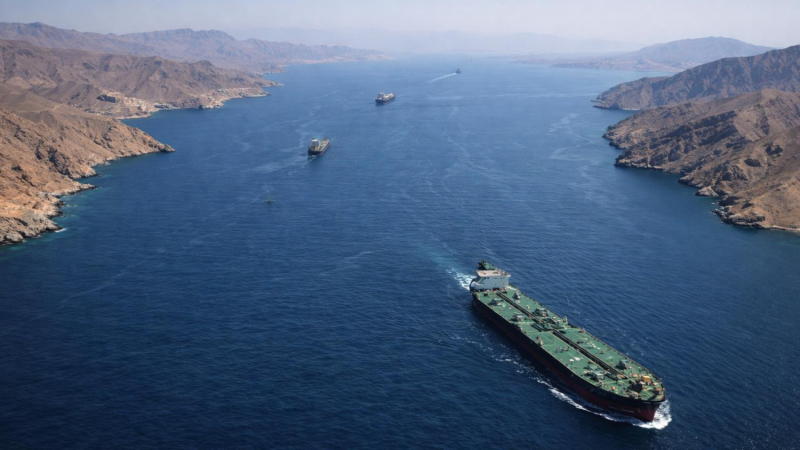
The conflict has also produced immediate economic consequences. Shipping through the Strait of Hormuz — the maritime chokepoint through which roughly one-fifth of the world’s oil supply normally passes — has been severely disrupted. Oil prices surged above $120 per barrel during the first phase of the war, triggering volatility across global financial markets and raising concerns about the broader economic impact of prolonged instability in the Gulf.
Yet the most striking feature of the war so far has not been the intensity of the military exchanges but the uncertainty surrounding the strategic objectives of the campaign. Statements from the United States, Iran, and regional actors suggest that the conflict may be entering a phase of strategic ambiguity in which the military balance, political calculations, and economic pressures will shape the war’s future trajectory.
Strategic Ambiguity in the U.S. War Effort
Contradictory Messaging from Washington
One of the defining characteristics of the conflict has been the inconsistent messaging emerging from the United States regarding both the progress of the campaign and its ultimate objectives. President Donald Trump has repeatedly suggested that the military operation has been highly successful and could soon conclude.
At one point he told reporters that the war was “very complete, pretty much,” adding that U.S. forces were “very far ahead of schedule.” Yet within hours he indicated that the United States could expand operations further if necessary. “We could call it a tremendous success right now,” he said. “Or we could go further. And we’re going to go further.”
This ambiguity has created considerable uncertainty among allies, markets, and analysts attempting to assess the trajectory of the conflict. If the campaign is nearing completion, the rationale for additional escalation remains unclear. Conversely, if the most intense phase of operations has not yet begun, declarations of imminent victory appear premature.
The Prospect of Escalation
Statements from senior defense officials reinforce the possibility that the war could still intensify significantly. U.S. Defense Secretary Pete Hegseth has indicated that the most powerful phase of the campaign may still lie ahead, involving expanded air operations and the use of heavier conventional munitions against Iranian military infrastructure.
The suggestion that the conflict may simultaneously be approaching its end while entering a more destructive phase reflects a deeper strategic tension within U.S. policy. Washington appears to be attempting to achieve rapid military success while avoiding the political and economic costs associated with a prolonged regional war. Yet the objectives articulated by American officials — including preventing Iran from threatening U.S. forces or allies for the foreseeable future — may require a much longer and more complex military campaign.
This contradiction raises fundamental questions about the strategic logic guiding the war. Historically, U.S. military doctrine has emphasized rapid dominance through overwhelming air power and precision strikes designed to cripple an adversary’s command structure and operational capabilities. However, the effectiveness of such strategies depends heavily on the assumption that the targeted state will experience rapid systemic collapse once its leadership and infrastructure are degraded.
In the case of Iran, that assumption may prove questionable.
Domestic Political Constraints in the United States
Congressional Criticism
The lack of a clearly defined strategy has already begun to generate political friction in Washington. Several members of the U.S. Senate expressed deep concern after receiving classified briefings on the conflict.
Senator Mark Kelly argued that the administration appeared to lack a coherent plan for ending the war, stating that officials had presented “no strategic goal, no timeline, and no exit strategy.” Senator Jacky Rosen warned that the United States risked drifting into “another forever war,” echoing concerns raised during earlier American interventions in Iraq and Afghanistan.
Senator Elizabeth Warren has also indicated that she would oppose additional funding for the campaign. “No more money,” she declared, emphasizing that Congress retains the power to halt military operations by refusing further appropriations.
The Cost of War
These political tensions are reinforced by the financial burden of the conflict. According to reporting cited by CNBC, the U.S. military expended approximately $5.6 billion in munitions during the first two days of the war. Analysts at the Center for Strategic and International Studies estimate that the conflict is costing roughly $891 million per day.
These expenditures come at a time when American military resources are already stretched by commitments in Europe and the Indo-Pacific. The diversion of additional capabilities to the Middle East could therefore create strategic trade-offs for U.S. policymakers attempting to manage multiple global crises simultaneously.
Iran’s Strategy of Endurance
The Logic of “Mosaic Defense”
Iran’s military response to the conflict reflects a doctrine that has been developing for more than two decades. Known as “mosaic defense,” the strategy is based on the assumption that Iran cannot match the United States or Israel in conventional military power. Instead, Iranian planners have focused on building a system capable of surviving the initial shock of a major military assault.
The doctrine emphasizes decentralization and redundancy. Rather than concentrating authority in a single command structure that could be eliminated through targeted strikes, Iran has distributed command responsibilities across multiple regional and institutional layers. The Islamic Revolutionary Guard Corps (IRGC), the regular army, Basij militia units, missile forces, and provincial command structures all form components of a dispersed defensive network.
The purpose of this system is to ensure that the Iranian state and military apparatus can continue operating even if senior leaders are killed, communications networks are disrupted, and key infrastructure is destroyed.
Succession and System Resilience
This strategic logic appears to have shaped Iran’s political response to the assassination of Supreme Leader Ali Khamenei during the opening phase of the war. Rather than triggering a leadership vacuum, the Iranian system rapidly installed his son, Mojtaba Khamenei, as the new supreme leader.
Reports indicate that Iranian officials had prepared contingency plans involving multiple layers of successors for key leadership positions. This concept, sometimes described by analysts as the “fourth successor” doctrine, reflects an effort to ensure institutional continuity even under conditions of severe wartime disruption.
From Tehran’s perspective, the war is not necessarily a contest that must be decided quickly. Iranian leaders appear to view time itself as a strategic instrument. By prolonging the conflict and increasing the costs imposed on their adversaries, they may hope to erode the political will of the United States and its partners.
This approach aligns with broader theories of asymmetric warfare in which weaker actors seek to offset military disadvantages by extending conflicts over time and exploiting the economic and political vulnerabilities of stronger opponents.
Global Economic Shockwaves
Energy Markets and the Strategic Importance of the Strait of Hormuz
The most immediate global consequence of the war has been the disruption of energy markets. The Strait of Hormuz, one of the most critical maritime chokepoints in the world economy, has become the focal point of strategic tension. Approximately 20 percent of the world’s oil supply normally passes through this narrow waterway connecting the Persian Gulf to the Indian Ocean.
Following Iranian warnings that ships attempting to transit the strait could be targeted, maritime traffic through the corridor has slowed dramatically. Several shipping companies temporarily suspended transit operations while insurers raised premiums for vessels entering the Gulf. The resulting uncertainty triggered extreme volatility in global energy markets.
Oil prices briefly surged above $120 per barrel, the highest level since the early stages of Russia’s invasion of Ukraine. Financial markets reacted sharply to the sudden increase in energy costs, with major stock indices experiencing steep declines before partially recovering after statements from U.S. officials suggesting the conflict might end sooner than expected.
President Donald Trump attempted to calm markets by suggesting that the war could conclude quickly and that Washington was prepared to intervene to stabilize energy supplies. “We’re also waiving certain oil-related sanctions to reduce prices,” he said, adding that the United States was ready to escort commercial tankers through the Strait of Hormuz if necessary.
Despite these assurances, uncertainty remains high. Even a partial disruption of shipping through the strait could significantly reduce global oil supply, placing sustained upward pressure on energy prices and increasing the risk of inflation across major economies.
Domestic Economic Consequences in the United States
Rising Energy Prices and Political Pressure
The war’s economic impact is already being felt inside the United States. The average price of gasoline has risen sharply, reaching approximately $3.48 per gallon, an increase of nearly 48 cents within a single week. Such rapid price increases carry significant political implications, particularly as the United States approaches the 2026 midterm elections.
Economic anxiety among voters has intensified as fuel prices rise alongside broader cost-of-living concerns. Public opinion surveys conducted before the conflict indicated that affordability and inflation were already among the most important issues for American voters. The sudden energy shock risks reinforcing those pressures.
The political stakes are high for the White House. While the administration has framed the military campaign as a strategic necessity, critics argue that the conflict could deepen economic instability at a sensitive moment for the U.S. economy. Opposition lawmakers have warned that the war could push the United States toward a recession if energy prices remain elevated for an extended period.
Strategic Vulnerabilities in Global Technology Supply Chains
Semiconductor Production and Critical Materials
Beyond energy markets, the conflict has also exposed vulnerabilities in global technology supply chains. The semiconductor industry, which underpins modern digital infrastructure and the rapidly expanding artificial intelligence sector, depends on a range of materials sourced from the Middle East.
One of the most critical of these materials is helium, an essential component in semiconductor manufacturing processes used to cool equipment and support lithography systems that produce advanced microchips. Qatar produces more than one-third of the world’s helium supply, much of it extracted as a byproduct of liquefied natural gas production.
Analysts warn that prolonged disruptions to maritime transport in the Gulf could interrupt helium exports. Industry experts estimate that more than 25 percent of the global helium supply could be temporarily removed from the market if production or transportation is significantly disrupted.
Such disruptions could have cascading effects across the global technology sector, particularly at a time when semiconductor demand is already being driven by the expansion of artificial intelligence infrastructure.
Energy Costs and the Future of AI Infrastructure
The conflict also threatens to affect the economics of large-scale computing infrastructure. Modern artificial intelligence data centers require enormous amounts of electricity to operate, with some facilities consuming several times more energy than traditional data centers.
Rising energy prices could therefore slow the expansion of AI infrastructure projects, particularly those planned by major technology companies in the United States and Asia. Analysts warn that if oil prices remain elevated for a prolonged period, the total operating costs of AI data centers could rise significantly, forcing companies to delay or scale back planned investments.
The resulting slowdown could affect global demand for advanced memory chips produced by companies such as Samsung and SK Hynix, both of which have already experienced sharp declines in market value since the beginning of the conflict.
Russia as an Indirect Strategic Beneficiary
Energy Revenues and Economic Opportunity
Although Russia is not directly involved in the war, the crisis may produce significant strategic advantages for Moscow. Rising oil prices increase revenues for Russia’s energy sector, which remains a central pillar of the country’s economy.
European Council President António Costa summarized the geopolitical implications of the crisis by stating that “so far, there is only one winner in this war — Russia.” According to Costa, Moscow benefits from the surge in energy prices because it “gains new resources to finance its war against Ukraine.”
Higher global oil prices reduce the financial pressure created by Western sanctions imposed after the invasion of Ukraine. If the current energy shock persists for several months, it could significantly strengthen Russia’s fiscal position and provide additional funding for its military operations.
Strategic Distraction and the Ukraine War
The conflict also diverts Western political attention and military resources away from Ukraine. Ukrainian officials have expressed concern that air defense systems deployed to protect U.S. forces in the Middle East could otherwise have been used to defend Ukrainian cities from Russian missile attacks.
President Volodymyr Zelenskyy recently warned that every interceptor missile used to defend U.S. bases in the Middle East represents a resource that could have been deployed to protect Ukrainian territory.
This shift in strategic attention may ultimately weaken Western pressure on Moscow and allow Russia to consolidate its position in the war in Ukraine.
Regional Escalation and the Risk of Prolonged Conflict
Iran’s Refusal to Seek a Ceasefire
Iranian leaders have made clear that they are not seeking a rapid ceasefire. Mohammad Bagher Ghalibaf, the speaker of Iran’s parliament, declared that Tehran intends to continue fighting until its adversaries face meaningful consequences.
“Certainly we aren’t seeking a ceasefire,” he said. “We believe the aggressor must be punished and taught a lesson that will deter them from attacking Iran again.”
This rhetoric suggests that Iranian leaders believe prolonged conflict may ultimately strengthen their strategic position by imposing economic and political costs on the United States and its allies.
The Prospect of a Long War
Iran’s military doctrine emphasizes endurance rather than rapid victory. The country’s decentralized command structure, regional networks, and asymmetric warfare capabilities are designed to extend conflicts over time and impose sustained pressure on technologically superior adversaries.
This approach mirrors historical examples of asymmetric conflict in which weaker actors seek to exhaust stronger opponents through prolonged warfare. From Vietnam to Afghanistan, such strategies have demonstrated that military superiority does not necessarily guarantee rapid victory.
If Iran successfully prolongs the conflict, the political and economic costs of continued military operations may gradually erode support for the war among Western publics.
Conclusion
The war between the United States, Israel, and Iran has already produced far-reaching consequences extending well beyond the immediate battlefield. Energy markets have been destabilized, global technology supply chains face new risks, and the geopolitical balance among major powers is shifting.
While the initial phase of the conflict has been defined by rapid military escalation, the longer-term trajectory of the war may be shaped by economic pressures, political constraints, and the strategic endurance of the actors involved.
For Iran, the ability to survive the initial shock of military confrontation and extend the conflict over time may represent a form of strategic success. For the United States and its allies, the challenge lies in achieving their objectives without becoming trapped in another prolonged and costly Middle Eastern war.
As the conflict continues to unfold, its ultimate outcome will depend not only on battlefield developments but also on the broader geopolitical and economic dynamics now reshaping the international system.