Introduction
The war between the United States, Israel, and Iran was expected to be short. When the campaign began in late February 2026, its logic appeared straightforward. A high-intensity air operation—targeting Iran’s nuclear infrastructure, missile production facilities, air defenses, and command networks—was designed to produce rapid strategic effects. The assumption was that sustained precision strikes, combined with leadership decapitation and technological superiority, would force Tehran to concede before the conflict could expand. That expectation has not held.
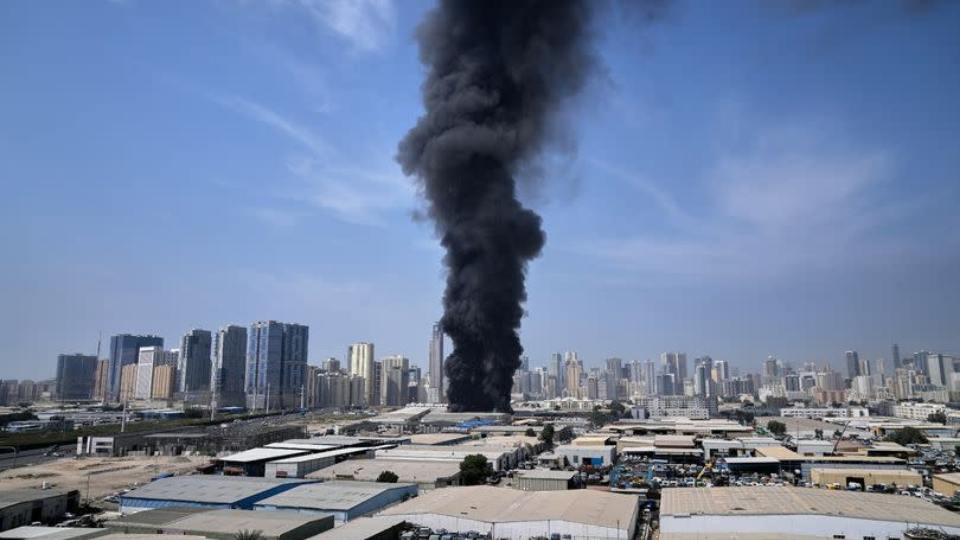
Nearly one month into the war, Iran has neither collapsed nor meaningfully altered its core positions. Instead, it continues to launch ballistic missiles and drones, sustain regional escalation, and—most critically—disrupt global energy flows through the Strait of Hormuz. Rather than a short coercive campaign, the conflict has evolved into a prolonged confrontation defined by endurance, adaptation, and control of escalation.
This outcome reflects a fundamental mismatch between military performance and strategic effect. Thousands of targets have been struck across locations such as Natanz, Isfahan, Khuzestan, and Yazd. Senior figures within the Islamic Revolutionary Guard Corps have been killed. Elements of Iran’s nuclear and military-industrial infrastructure have been damaged.
Yet these tactical achievements have not translated into decisive political outcomes. Instead, Iran has adapted. It has preserved a reduced but functional strike capability, shifted toward a more openly offensive posture, and expanded the conflict beyond its borders—into the Gulf, into regional infrastructure, and into the global energy system. The result is a strategic paradox: the side with overwhelming military superiority has not secured control over the trajectory of the war, while the weaker actor has managed to reshape it.
The conflict is no longer defined by how it began. It is defined by how it has changed—and by why the original assumptions behind a rapid war have failed.
The Logic of a Quick War: Airpower, Decapitation, and Coercion
The initial U.S.-Israeli campaign against Iran was built on a familiar model of modern warfare: rapid coercion through overwhelming airpower.
From the outset, the operational design focused on degrading Iran’s core military capabilities at speed and scale. This included sustained strikes against ballistic missile infrastructure, drone production facilities, air defense systems, naval assets, and command-and-control networks. Simultaneously, leadership decapitation was pursued as a force multiplier, with the targeted killing of senior figures across the Islamic Revolutionary Guard Corps and the broader security apparatus.
The expectation was not merely military degradation—but strategic shock.
By combining high-tempo precision strikes with the elimination of key decision-makers, Washington and Tel Aviv sought to compress time. The objective was to disrupt Iran’s ability to coordinate, degrade its capacity to sustain operations, and generate internal instability within the regime. In parallel, pressure was applied to Iran’s industrial base, including dual-use facilities such as steel production complexes in Ahvaz, Isfahan, and Neyshabur, which support both civilian sectors and military manufacturing.
This model has precedent.
Similar approaches have been used in previous conflicts—from Iraq in 2003 to more recent air campaigns—where technological superiority and intelligence dominance enabled rapid targeting cycles. The assumption underpinning such operations is that modern states, particularly those with centralized command structures, are vulnerable to disruption from above. Remove leadership, degrade infrastructure, and the system will fracture.
Iran, however, did not behave as expected.
Despite more than 14,000 reported strikes and the elimination of dozens of senior commanders and officials—including figures tied to missile programs, air defense, and internal security—the Iranian state did not collapse. Command structures proved more resilient than anticipated, supported by pre-planned succession mechanisms and decentralized operational authority. Instead of paralysis, the system absorbed losses and continued functioning.
Equally important, the campaign underestimated Iran’s preparation for precisely this scenario.
For years, Tehran had invested in dispersal, redundancy, and survivability. Missile capabilities were not concentrated in a small number of easily targetable sites but distributed across hardened underground facilities, mobile launch platforms, and geographically diverse locations—including mountainous regions such as Yazd, from which launches have continued despite sustained bombardment. This architecture was specifically designed to ensure continuity under attack.
As a result, the gap between military action and political effect widened.
Airpower succeeded in degrading Iran’s capabilities—but not in eliminating them. Leadership decapitation disrupted decision-making—but did not break it. Industrial strikes imposed costs—but did not cripple the system. The campaign achieved measurable tactical success, yet fell short of its central objective: forcing Iran to concede.
Instead of ending the war quickly, the opening phase revealed a more difficult reality.
Iran was not a system that could be collapsed from the air alone.
Adaptation Under Fire: From Survival to Strategic Endurance
If the opening phase of the war exposed the limits of rapid coercion, the weeks that followed revealed something more consequential: Iran’s ability not only to absorb pressure, but to adapt and recalibrate its strategy in real time.
What initially appeared as a defensive struggle for survival gradually evolved into a deliberate strategy of endurance.
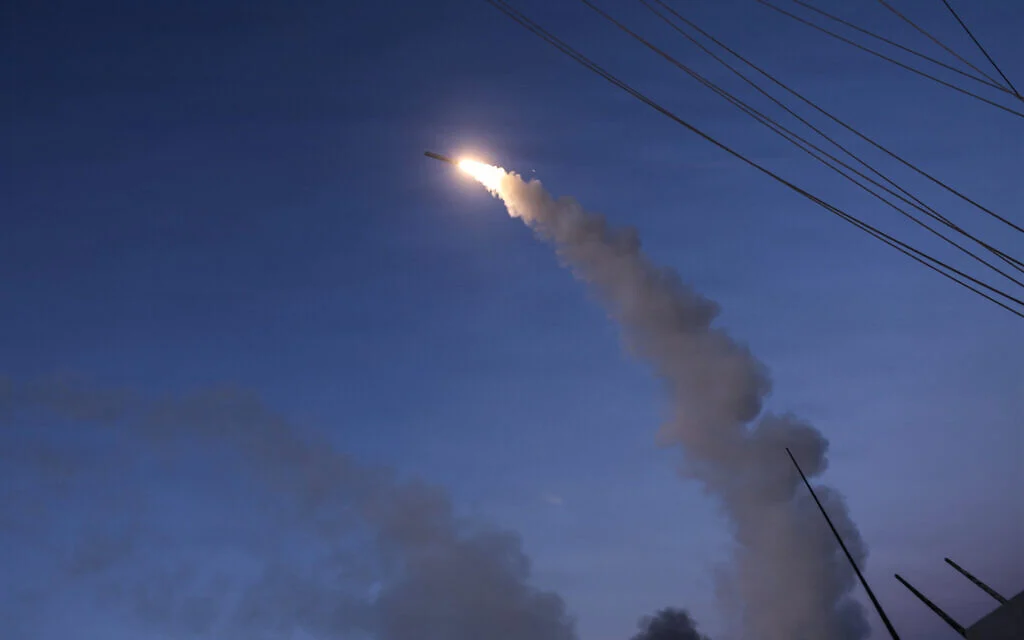
Despite sustained airstrikes targeting missile infrastructure, Iran has continued to launch ballistic missiles and drones at a steady pace. Strikes originating from dispersed and hardened locations—including mountain-based facilities in Yazd—demonstrate that its offensive capabilities, while degraded, remain operational. The persistence of launches, even at reduced scale, has been sufficient to maintain pressure on Israel, U.S. regional assets, and critical infrastructure across the Gulf.
This continuity is not accidental.
It reflects years of preparation centered on survivability. Iran’s military doctrine prioritizes redundancy, dispersal, and operational flexibility. Underground facilities, mobile launch platforms, and decentralized command structures are designed to function under conditions of sustained attack. Authority over missile use has reportedly been delegated to lower operational levels, reducing reliance on centralized command nodes that are vulnerable to decapitation strikes.
In effect, Iran has traded efficiency for resilience.
This shift has allowed Tehran to preserve a minimum credible level of offensive capability—enough not to win conventionally, but enough to prevent defeat and impose continuous costs on its adversaries.
At the same time, Iran has expanded the battlespace.
Rather than confining the conflict to its own territory, it has pursued what can be described as horizontal escalation—targeting U.S. bases, regional infrastructure, and strategic assets across multiple countries, including Iraq, the Gulf states, and beyond. These operations are not intended to achieve decisive military outcomes. Their purpose is to widen the scope of the conflict, complicate adversary planning, and raise the cumulative cost of continued operations.
This approach reflects a clear strategic logic.
Iran cannot match the United States and Israel in terms of conventional military power. It cannot control the air domain, nor can it protect all critical infrastructure from precision strikes. Under such conditions, the objective shifts: from winning the war outright to reshaping its dynamics.
Time becomes the central variable.
A prolonged conflict favors the side that can endure pressure longer, sustain lower-cost operations, and exploit the vulnerabilities of its adversaries. Iran’s use of relatively inexpensive drones and missiles—often costing tens of thousands of dollars—forces the United States and Israel to rely on interceptor systems that cost orders of magnitude more. This cost asymmetry, repeated over time, creates cumulative pressure on stockpiles, logistics, and political decision-making.
At the same time, Iran has demonstrated an ability to adapt tactically.
Early losses, including the elimination of senior commanders and damage to key facilities, did not produce systemic collapse. Instead, replacement figures emerged from within the same institutional networks, often from the Islamic Revolutionary Guard Corps, maintaining continuity in both command and strategic orientation. Over time, the composition of leadership has shifted toward more hardline and operationally focused figures, reinforcing a posture that is less cautious and more willing to escalate.
This adaptation has been accompanied by a shift in doctrine.
Senior Iranian officials have increasingly described their approach as moving from a defensive to an offensive posture. In practical terms, this does not imply conventional offensive dominance. Rather, it signals a greater willingness to initiate and expand attacks as part of deterrence—using escalation itself as a tool to shape the strategic environment.
The result is a war that no longer follows its initial trajectory.
What began as a high-intensity campaign designed to produce rapid strategic effects has transformed into a prolonged confrontation defined by persistence, adaptation, and incremental pressure. Iran’s objective is not to defeat its adversaries outright, but to deny them a decisive victory while steadily increasing the cost of continuing the war.
In this sense, survival has evolved into strategy.
And that strategy is built on attrition.
The Strait of Hormuz: From Military Theater to Global Leverage
The most consequential shift in the war has not taken place in the skies over Iran, but in the waters of the Strait of Hormuz.
It is here that Iran has transformed a regional military confrontation into a global strategic crisis.
Roughly 20 percent of the world’s oil supply—and a significant share of liquefied natural gas—passes through this narrow maritime corridor. From the early stages of the conflict, Iran moved to exploit this geographic reality, not through a formal blockade, but through calibrated disruption. Drone strikes on tankers, the threat of naval mines, and the use of anti-ship missiles created an environment of persistent uncertainty.
The result was immediate.
Tanker traffic dropped dramatically, in some cases by more than 90 percent. Insurance premiums surged, and in many instances coverage was withdrawn altogether. Commercial shipping companies, faced with unacceptable risk, reduced or halted transit through the strait. The disruption was not merely physical—it was psychological and financial.
This distinction is critical.
Iran did not need to fully close the strait to achieve strategic effect. It only needed to make passage unsafe enough that market actors—insurers, shipowners, and crews—would refuse to operate. In doing so, Tehran effectively shifted the burden of escalation onto the global economy.
Energy markets responded accordingly.
Oil prices surged, with Brent crude approaching or exceeding $120 per barrel at peak disruption. Supply chains were strained, and concerns over energy security intensified across Europe and Asia. For countries already navigating fragile post-crisis economic conditions, the instability introduced by Hormuz became a central pressure point.
In this context, the war ceased to be a localized military campaign.
It became a global economic event.
Iran has reinforced this leverage through a strategy of selective control. Rather than imposing a uniform blockade, it has reportedly allowed passage to vessels associated with certain countries while restricting others. This emerging “controlled access” model serves two purposes: it demonstrates Iran’s capacity to regulate the flow of energy, and it introduces a political dimension to maritime transit, where access becomes contingent on alignment or neutrality.
The implications are far-reaching.
First, this strategy places significant pressure on Gulf states, particularly the United Arab Emirates and Bahrain, whose economic models depend on stable energy exports and secure maritime routes. Iranian threats to target critical infrastructure—including power plants, desalination facilities, and ports—have further heightened their vulnerability.
Second, it complicates U.S. military options.
Efforts to reopen the strait through force—whether via convoy systems, mine-clearing operations, or direct strikes on Iranian launch capabilities—face a fundamental challenge: even a reduced Iranian capability is sufficient to sustain risk. A single successful attack on a tanker or escort vessel could halt traffic again, regardless of the level of military presence.
This creates a paradox.
Military superiority does not automatically translate into control over maritime behavior. The decision to transit the strait ultimately lies not with navies, but with commercial actors—and their tolerance for risk is low.
Third, the Hormuz dynamic amplifies Iran’s broader strategy of attrition.
By linking military operations to global energy flows, Tehran has introduced a feedback loop: continued conflict generates economic disruption, which in turn increases international pressure for de-escalation. In this way, Iran is not only contesting the battlefield, but shaping the political and economic environment in which decisions about the war are made.
This is where the balance of the conflict has shifted most clearly.
While the United States and Israel retain overwhelming military dominance, Iran has gained leverage over something they cannot easily control: the willingness of the global system to absorb prolonged disruption.
The Strait of Hormuz has therefore become more than a chokepoint.
It is the central arena in which the strategic outcome of the war is being contested.
Negotiation Without Convergence: Why Diplomacy Remains Stalled
As the military campaign has failed to produce decisive outcomes, attention has increasingly shifted toward diplomacy.
Yet despite signals of engagement, the prospects for a negotiated settlement remain limited—not because diplomacy is absent, but because the underlying strategic positions of the parties are fundamentally misaligned.
On the U.S. side, the framework for ending the war has been expansive.
The reported 15-point proposal reflects the full spectrum of Washington’s objectives: dismantling Iran’s nuclear infrastructure, ending uranium enrichment, restricting missile capabilities, curbing regional influence, and ensuring the permanent reopening of the Strait of Hormuz. In return, Iran would receive sanctions relief and support for a civilian nuclear program.
In essence, the proposal seeks to translate battlefield pressure into comprehensive strategic concessions.
From Tehran’s perspective, this is precisely the problem.
Iran does not view its current position as one of imminent defeat. On the contrary, its leadership increasingly frames the war as evidence of resilience and, in some respects, strategic success. The survival of the regime, the continuation of missile operations, and the ability to disrupt global energy flows are all interpreted domestically as indicators that the Islamic Republic has weathered the most dangerous phase of the conflict.
This perception shapes its negotiating posture.
Iran has signaled openness to diplomacy, but only within parameters that reflect its own assessment of the war. These include demands for a permanent end to hostilities, guarantees against future attacks, sanctions relief that may be framed as compensation, and the preservation—rather than dismantlement—of key elements of its missile and nuclear capabilities.
These positions are not tactical bargaining points.
They represent minimum conditions derived from Iran’s strategic reading of the conflict. In this context, accepting the U.S. framework would not be seen as compromise, but as capitulation—an outcome that remains politically and ideologically unacceptable to the current leadership.
This divergence is reinforced by a deeper issue: mutual misperception.
Washington appears to operate on the assumption that sustained military pressure will eventually compel Iran to concede. Tehran, by contrast, believes that time is working in its favor—that the longer the conflict continues, the greater the economic and political costs for the United States, its allies, and the global system.
As a result, both sides maintain maximalist positions.
This dynamic is visible in the structure of ongoing contacts. Reports suggest that communication has largely taken place indirectly, through intermediaries, without meaningful progress on implementation details. Even proposals for temporary ceasefires—such as a one-month pause linked to negotiations—are viewed with skepticism in Tehran, where previous diplomatic engagements are seen as having been followed by renewed military action.
Trust is therefore minimal.
At the same time, military developments continue to shape the diplomatic environment. Additional U.S. troop deployments, including the potential movement of forces such as elements of the 82nd Airborne Division, signal readiness for escalation even as negotiations are discussed. For Iran, this reinforces the perception that diplomacy may serve as a cover for further military pressure rather than a genuine off-ramp.
This creates a self-reinforcing deadlock.
Each side interprets the other’s actions through a lens of distrust. Diplomatic signals are seen as tactical maneuvers rather than strategic shifts. Concessions are withheld in anticipation of future escalation. And the gap between positions remains too wide to bridge in the short term.
Under these conditions, negotiations are unlikely to produce a rapid resolution.
Instead, diplomacy becomes another arena of the conflict—one in which both sides seek to shape perceptions, test limits, and gain advantage, without fundamentally altering their core objectives.
The war, in other words, continues—both on the battlefield and at the negotiating table.
Conclusion
Nearly one month into the conflict, the central assumption that shaped the war has collapsed.
The expectation that overwhelming airpower, leadership decapitation, and sustained precision strikes could rapidly compel Iran to concede has not materialized. Despite extensive damage to its military infrastructure, the elimination of senior commanders, and thousands of strikes across its territory, Iran has neither surrendered nor fundamentally altered its strategic posture.
Instead, the war has evolved in a different direction.
What was conceived as a short, coercive campaign has become a prolonged confrontation defined by endurance, adaptation, and strategic asymmetry. Iran has preserved a reduced but functional capacity to strike, expanded the geographic scope of the conflict, and leveraged its position along the Strait of Hormuz to transform a regional war into a global economic disruption.
In doing so, it has altered the logic of the conflict.
The question is no longer whether Iran can match the military capabilities of the United States and Israel—it cannot. The question is whether those capabilities can be translated into decisive political outcomes. So far, the answer has been negative.
This reflects a deeper structural reality.
Modern airpower can degrade, disrupt, and impose costs. It can destroy infrastructure and eliminate individuals. But against a state that has prepared for survival—through dispersal, redundancy, and a doctrine built around asymmetry—it may not be sufficient to produce collapse or compel surrender. The gap between tactical success and strategic effect, evident from the early stages of the campaign, has only widened over time.
At the same time, Iran’s strategy carries its own limits.
Sustaining a war of attrition imposes significant economic, social, and political costs. The resilience demonstrated thus far does not eliminate underlying vulnerabilities, particularly in a system already strained by sanctions, internal pressures, and structural inefficiencies. Endurance can delay defeat, reshape the conflict, and impose costs—but it does not guarantee a favorable long-term outcome.
This leaves the war at a critical juncture.
For the United States and Israel, the available options are increasingly constrained. Continuing the current campaign risks further entrenching a cycle of attrition without delivering decisive results. Escalation—particularly through direct ground operations or large-scale strikes on energy infrastructure—could impose greater pressure on Iran, but at the cost of significant regional expansion and economic disruption. A negotiated settlement remains possible, but only if expectations are adjusted to reflect the realities of the battlefield.
For Iran, the path forward is equally complex.
While it has succeeded in avoiding rapid defeat and in reshaping the dynamics of the war, it faces the challenge of converting short-term resilience into sustainable strategic advantage. Its current position provides leverage—but not resolution.
In this sense, the war has reached neither conclusion nor equilibrium.
Instead, it has entered a phase in which all actors retain the capacity to escalate, but none possess a clear pathway to decisive victory. The longer this condition persists, the more the conflict will be shaped not by decisive battles, but by cumulative pressure—military, economic, and political.
The quick war that was anticipated at the outset has failed.
What has emerged in its place is something far more complex: a prolonged contest of endurance, where the outcome will depend less on who strikes hardest, and more on who can sustain the costs of continuing.