Introduction
Nearly three weeks into the conflict, the operational trajectory challenges early assumptions about the effectiveness of sustained U.S. and Israeli airpower against Iran. Initial expectations centered on rapid degradation of Iran’s missile infrastructure, suppression of launch capabilities, and disruption of its ability to sustain coordinated strikes. Claims of a 90–95% reduction in launch activity and the destruction of approximately 80% of launchers reinforced this narrative.
However, battlefield developments indicate a different reality. Iran has launched more than 3,000 missiles as of 20 March, continues to conduct repeated waves of attacks—including seven waves within a ten-hour period—and has increased the effectiveness of individual strikes. At the same time, advanced aircraft have been successfully engaged, critical enablers of air operations have been targeted, and missile launch capacity remains intact despite sustained strikes.
These developments point to a structural pattern: rather than eliminating Iranian capabilities, the campaign has triggered their adaptation. The operational environment is no longer defined by degradation alone, but by the emergence of a more survivable, decentralized, and efficient system of force projection.
Missile Operations: Sustained Tempo and Increased Lethality
Despite early claims of severe degradation, Iranian missile activity has not only persisted but intensified. By mid-March, over 3,000 missiles had been launched, with sustained strikes targeting Israel and U.S. positions. The ability to conduct multiple waves of attacks within short timeframes demonstrates continued operational capacity and coordination.
The reduction in launch volume observed earlier in the conflict is better understood as a temporary pause linked to repositioning and munitions management rather than permanent loss of capability. This interpretation is supported by the subsequent increase in launch frequency and effectiveness.
A key development is the shift in strike methodology. Iran has moved from large-volume salvos toward more efficient targeting. The use of cluster-type warheads allows a single missile to affect multiple locations simultaneously, increasing lethality per strike. This has enabled Iran to compensate for any reduction in launcher numbers by increasing the impact of each launch.
Strikes on Dimona and Arad illustrate this shift. A limited number of missiles penetrated defenses, caused injuries, and prompted internal investigations, demonstrating that smaller, more precise strikes can produce disproportionate operational and psychological effects.
Launcher Survivability and Structural Adaptation
The persistence of missile operations is directly linked to changes in Iran’s launch architecture. Independent assessments suggest that a portion of targets claimed as destroyed were high-fidelity decoys, designed to absorb precision-guided munitions and distort battle damage assessments.
Simultaneously, Iran has relocated approximately 100–120 heavy launchers into hardened and subterranean facilities. These “super-hardened” sites provide protection against airstrikes and ensure continuity of operations even under sustained pressure.
The use of mobile launch systems, including Zolfaghar and Dezful platforms, further enhances survivability. These systems operate from underground tunnels, move to pre-surveyed launch points, execute strikes, and return to protected positions in under ten minutes. This rapid cycle often outpaces the ability of surveillance and strike systems to detect, track, and engage targets.
Decentralization is a critical component of this model. Launch units operate with limited reliance on centralized command, reducing vulnerability to decapitation strikes and increasing operational flexibility. This structure ensures that even significant attrition does not eliminate the overall capability to conduct sustained missile operations.
Air Defense Adaptation and Contested Airspace
During the initial phase of the conflict, U.S. and Israeli forces conducted deep penetration strikes facilitated by detailed intelligence, electronic warfare support, and temporary local air superiority. However, as the conflict progressed, Iran adapted its air defense posture.
Ambush-style air defense systems emerged from concealed tunnel complexes and dispersed across wider areas as the intensity of air operations declined. This shift increased survivability and allowed Iran to contest previously secure operational corridors.
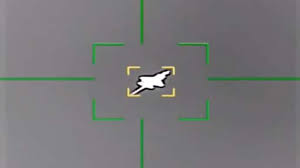
This adaptation resulted in the successful engagement of advanced aircraft. A U.S. F-35 was hit by a surface-to-air missile equipped with a fragmentation warhead and forced to crash-land. Shortly thereafter, an Israeli F-16 was also targeted. These incidents indicate that Iranian forces have identified and adapted to previously used strike corridors.
The consequence is a degradation of tactical airpower effectiveness. Increased risk to high-value assets constrains the ability to conduct sustained deep strike missions and forces greater reliance on strategic airpower, which is more resource-intensive and less flexible.
Targeting of Operational Enablers and Systemic Constraints
Iran has expanded its targeting beyond conventional military assets to include critical enablers of air operations. Submunition-equipped missiles have been used against large air bases and support infrastructure.
Reported strikes on KC-135 tanker aircraft in Saudi Arabia highlight this approach. These aircraft are essential for aerial refueling and long-range operations but are highly vulnerable due to the lack of hardened protection. Even limited fragmentation damage can render them inoperable for extended periods.
The degradation of aerial refueling capacity directly reduces sortie generation rates, limiting the ability to sustain air operations over long distances. In addition, unexploded submunitions and debris create operational hazards that delay runway clearance and further constrain activity.
These factors collectively contribute to a reduction in the effectiveness of tactical air operations and reinforce Iran’s ability to maintain operational continuity under sustained pressure.
Strategic Context: From Operational Outcomes to Structural Effects
While the operational phase of the conflict has demonstrated Iran’s ability to sustain and adapt its military capabilities, the broader strategic picture is shaped by developments beyond the battlefield. The war has increasingly shifted into a multi-domain confrontation involving economic pressure, energy disruption, internal power reconfiguration, and evolving deterrence dynamics.
Rather than producing rapid strategic resolution, the conflict has generated a prolonged contest in which time, resilience, and systemic leverage play a central role. Iran’s approach reflects a long-term orientation, while the United States and Israel face immediate political, economic, and strategic constraints.
Energy Leverage and the Strait of Hormuz
The Strait of Hormuz has emerged as a central instrument of Iranian strategy. By demonstrating its ability to disrupt maritime traffic, Iran has imposed immediate and systemic costs on global energy markets. This disruption has not required full closure or permanent control; the credible ability to interfere with flows has been sufficient to generate volatility and pressure.
This dynamic has produced tangible outcomes. Reports indicate that the United States has allowed Iran access to approximately $14 billion in oil revenue, including the resumption of oil-related transactions during an active conflict. This represents a significant deviation from previous sanctions policy and suggests that economic pressure generated by maritime disruption has influenced decision-making.
Iran’s leverage in this domain is reinforced by structural factors. It has previously endured periods in which oil exports declined by up to 90% under maximum pressure, demonstrating an ability to absorb economic constraints over extended periods. In contrast, the disruption of Hormuz produces immediate consequences for global markets, increasing political pressure on energy-importing states.
This asymmetry creates a condition in which time favors Iran. Sustained disruption increases costs for its adversaries more rapidly than for Iran itself, enabling it to convert geographic positioning into strategic leverage.
Coerced Interdependence and Systemic Influence
The energy dimension of the conflict has generated a broader structural effect: the emergence of coerced interdependence. States dependent on Gulf energy flows are increasingly required to incorporate Iran into their strategic calculations, not through cooperation, but through the necessity of managing disruption risk.
This form of interdependence differs from traditional models based on mutual benefit. It is defined by asymmetry and pressure. Iran does not need to control energy flows; it only needs to retain the ability to disrupt them. This capability alone is sufficient to influence global economic and political decisions.
There is little indication that this dynamic will disappear with the end of active hostilities. The conflict has demonstrated both the vulnerability of global energy systems and Iran’s capacity to exploit that vulnerability. As a result, Iran’s role in the regional and global energy architecture is likely to become more entrenched.
Internal Power Dynamics and the Rise of Security Governance
The conflict has accelerated changes within Iran’s internal power structure. Despite sustained decapitation strikes and the elimination of senior figures, the regime remains operational and shows no indication of willingness to compromise.
At the same time, the balance of power within the system is shifting. Civilian leadership has demonstrated limited influence over operational decisions, as evidenced by contradictions between political statements and continued military activity. This suggests that decision-making is increasingly concentrated within security institutions, particularly the Islamic Revolutionary Guard Corps.
The appointment of figures such as Mohammad Bagher Zolghadr to key positions reinforces this trend. With a background in the IRGC and the judiciary, his role reflects a system in which strategic decision-making is aligned more closely with threat perception and regime security than with diplomatic engagement.
However, this consolidation is not without tension. Continued decapitation strikes have disrupted coordination, introduced friction between political and military institutions, and raised uncertainty regarding succession and long-term control. While the system remains resilient, these dynamics complicate internal governance and strategic coherence.
Doctrinal Shift: From Strategic Patience to Escalation Management
The removal of Ayatollah Ali Khamenei has contributed to a shift in Iran’s strategic doctrine. Under previous leadership, Iran emphasized “strategic patience,” characterized by calibrated responses designed to avoid uncontrolled escalation.
In the current context, this restraint appears reduced. A more assertive approach is emerging, particularly within segments of the IRGC that have long argued that previous restraint was interpreted as weakness. The current strategy reflects a willingness to escalate incrementally in response to pressure, expanding both the scale and scope of operations.
This does not represent a move toward irrational behavior, but rather a recalibration of risk. Escalation is now treated as a tool for restoring deterrence rather than as a risk to be avoided. Each increase in pressure is met with a corresponding increase in response, creating a dynamic of escalation competition.
This approach extends beyond direct military engagement. Potential escalation pathways include targeting regional energy infrastructure, activating additional fronts through allied actors, and expanding disruption of maritime routes beyond the Strait of Hormuz.
Networked Resilience and Proxy Adaptation
Iran’s strategic position is reinforced by the resilience of its network of allied actors. Developments involving Hezbollah illustrate how organizations subjected to significant military pressure can recover, adapt, and resume operations.
Following extensive strikes, leadership losses, and intelligence penetration, Hezbollah used the ceasefire period as an operational interval to rebuild its capabilities. Reconstruction began immediately after the cessation of hostilities, with a systematic effort to restore infrastructure, reorganize command structures, and adapt operational practices.
This included a shift from centralized structures toward decentralized, compartmentalized units, as well as changes in communication methods to reduce vulnerability. The organization’s ability to resume sustained attacks, including strikes reaching southern Israel, demonstrates that tactical damage did not result in strategic collapse.
This pattern of networked resilience enhances Iran’s overall strategic position by extending its operational reach and increasing the complexity of the conflict environment.
Temporal Strategy and the Accumulation of Pressure
Iran’s approach reflects a strategy in which time functions as a central variable. Rather than seeking rapid resolution, it is pursuing sustained pressure across multiple domains. Missile operations, energy disruption, and multi-front engagement generate cumulative effects over time.
As noted by Vali Nasr, the longer the conflict continues, the more Iran builds leverage while the strategic calculations of its adversaries face increasing strain. The United States and Israel operate under immediate constraints, including market volatility, political pressure, and the need to demonstrate progress within limited timeframes.
This creates a structural asymmetry. Iran’s capacity to endure and sustain pressure allows it to extend the conflict, while its adversaries face escalating costs. In this context, time becomes a strategic resource rather than a constraint.
Nuclear Dimension and Strategic Thresholds
The nuclear issue remains central to the conflict’s long-term implications. Iran retains significant capabilities, including stockpiles of approximately 440 kilograms of uranium enriched to 60%, placing it close to weapons-grade thresholds.
Within Iranian strategic thinking, nuclear capability is increasingly framed as a deterrent rather than an offensive tool. The objective is not necessarily to initiate conflict, but to eliminate vulnerability to coercion. The experience of other nuclear-armed states suggests that the acquisition of such capability fundamentally alters external behavior, shifting from confrontation to containment.
At the same time, the current leadership configuration may be less constrained by previous doctrinal limitations. The possibility of a shift away from threshold status toward full nuclear capability cannot be excluded, particularly in a context of sustained confrontation and perceived strategic opportunity.
Strategic Assessment and Trajectory
The conflict has not produced decisive outcomes in favor of any actor. However, its structural dynamics are increasingly evident. Iran has demonstrated the ability to preserve its core capabilities, adapt under pressure, and impose costs across multiple domains.
At the same time, uncertainties remain. Internal tensions, sustainability of energy leverage, and the potential for further escalation introduce variability into the trajectory of the conflict. The willingness of external actors to escalate or adjust strategy will play a critical role in shaping future developments.
Conclusion
The war reveals a shift from expectations of rapid, decisive outcomes toward a prolonged contest defined by adaptation, endurance, and structural leverage. Iran has not achieved a decisive victory, but it has denied key objectives, preserved its operational capacity, and expanded its influence within critical domains.
The conflict has accelerated internal transformations, reinforced the role of security institutions, and altered strategic calculations across the region. The emergence of energy leverage, networked resilience, and escalation competition suggests that the implications of this war will extend beyond its immediate duration.
The central dynamic is not dominance, but constraint. The ability to impose costs without achieving decisive outcomes has reshaped the strategic environment, highlighting the limits of force against a resilient and adaptive adversary operating within a system of global interdependencies.