Summary
The Islamabad meeting between U.S. Vice President JD Vance and Iranian Parliament Speaker Mohammad Bagher Ghalibaf was one of the most important diplomatic encounters of the current crisis, even though it ended without agreement. The talks were serious, lengthy, and politically consequential, yet they failed to bridge core disputes over the nuclear file, the Strait of Hormuz, sanctions, and the wider regional battlefield. This article argues that the meeting did not collapse in a conventional sense; rather, it revealed a structured deadlock. Washington appears to have approached the talks expecting pressure to yield concessions, while Tehran arrived convinced that endurance, maritime leverage, and time remained on its side. Pakistan, meanwhile, emerged not as a passive host but as an active mediator whose principal achievement was preserving a diplomatic channel under fragile ceasefire conditions. The Islamabad round did not produce peace, but it clarified the shape of the conflict more sharply than before.
Introduction
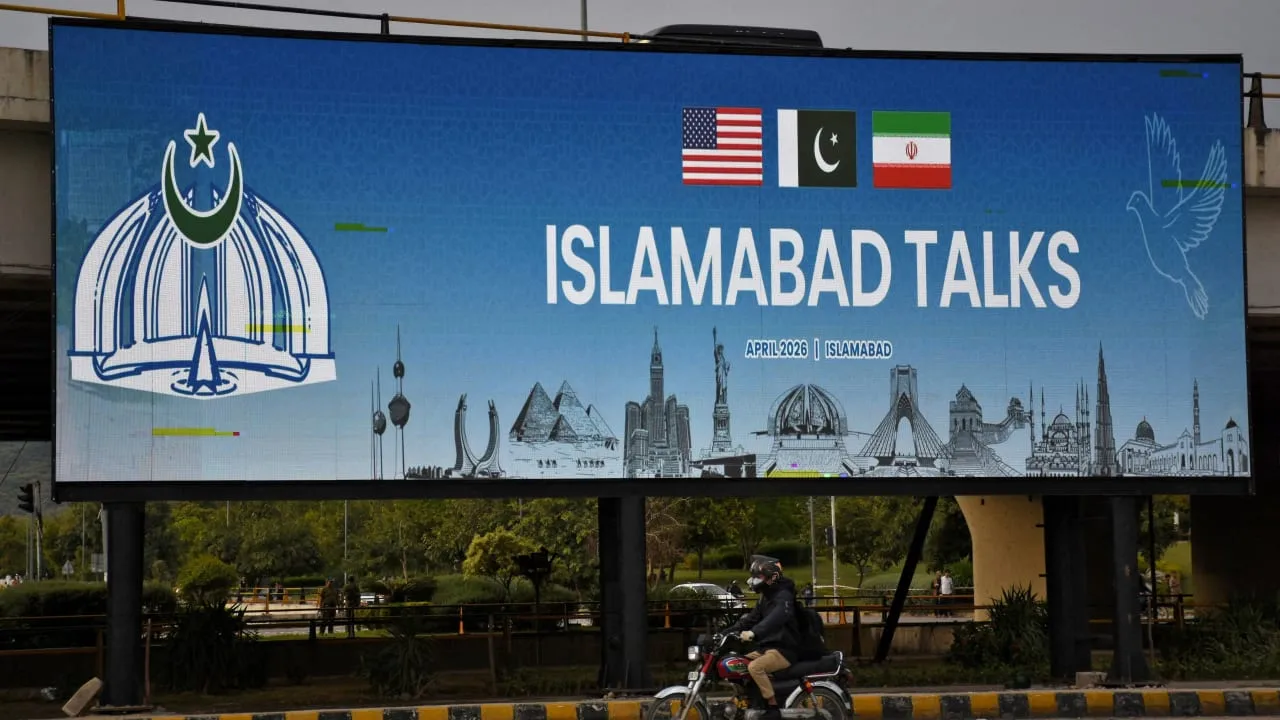
The April 12 meeting in Islamabad did not deliver a breakthrough, but it should not be dismissed as a failed diplomatic spectacle. It was, instead, a serious and consequential round of negotiations that ended exactly where the wider confrontation now stands: suspended between war and settlement, engagement and mistrust, pressure and resistance. The absence of agreement was important. The fact that the meeting took place at all was equally important.
For the United States, the talks were an attempt to translate military pressure into political concessions. For Iran, they were an opportunity to show that it remained unbroken, unwilling to negotiate from weakness, and still capable of shaping the terms of any postwar arrangement. For Pakistan, the talks were a test of whether mediation could hold the line between ceasefire and renewed escalation. In that sense, Islamabad was not only a negotiation between Washington and Tehran. It was also a negotiation over the meaning of the war itself and over who now holds the stronger hand.
The central lesson of Islamabad is straightforward: diplomacy remains alive, but it is operating inside a hardening strategic deadlock. The parties are still willing to talk, yet they are not negotiating from a shared understanding of reality. That gap explains both the importance of the meeting and the reason it could not produce a deal.
A Meeting That Mattered Even Without a Deal
The Islamabad round mattered because it marked rare high-level direct engagement at a moment when open conflict had not fully given way to peace. The talks lasted roughly twenty-one hours, which alone suggests that they were substantive and not merely ceremonial. This was not a brief exchange for public consumption. It was an intensive effort to test whether the war could be politically contained.
That matters because high-level contact under such conditions is itself a political event. Diplomatic significance is not measured only by whether a document is signed. It is also measured by whether adversaries are prepared to explore terms, define red lines, and expose where the real barriers lie. Islamabad did exactly that.
The meeting also mattered because it made clear that the postwar agenda has expanded well beyond the bounds of earlier U.S.–Iran diplomacy. This was not a narrow exercise focused exclusively on enrichment levels and technical monitoring. It involved sovereignty, military posture, maritime leverage, sanctions, frozen assets, regional ceasefires, and the political language of victory and capitulation. Islamabad therefore exposed not a single dispute, but a layered negotiation over the future balance of power.
Three Narratives, One Meeting
One of the clearest results of the Islamabad talks was the emergence of three sharply different narratives about what happened.
Washington presented the outcome as a case of Iranian refusal. The U.S. line suggested that a serious offer had been made, that the discussions had been substantive, and that Tehran had chosen not to accept the essential terms. This framing served an obvious purpose: to preserve the image of American leverage and to avoid any suggestion that the United States had entered the talks from a position of urgency.
Tehran described the same meeting very differently. Iranian messaging emphasized seriousness, goodwill, and active participation, while insisting that the talks failed because of excessive U.S. demands and because a small number of major issues remained unresolved. This allowed Iran to present itself as open to diplomacy without appearing concessionary. It also reinforced a broader narrative visible throughout the crisis: Iran is willing to negotiate, but not under coercive conditions and not at the expense of sovereignty.
Pakistan’s position was more measured than either side’s. Its language stressed constructive engagement, continuation of the ceasefire, and the need to keep the channel open. Pakistan avoided assigning public blame and instead framed the talks as part of a continuing process. This was not rhetorical caution alone. It reflected Pakistan’s strategic interest in preserving diplomatic momentum and consolidating its own role as mediator.
These competing narratives are important because they reveal that the struggle in Islamabad was not confined to the negotiating room. It continued immediately in the battle to define what the meeting meant.
The Agenda Was Too Wide for Easy Success
A central reason no breakthrough emerged is that the talks were dealing with too many core disputes at once.
The nuclear issue remained central, but it was far from the only matter on the table. Washington appears to have sought a clear Iranian commitment not to move toward nuclear weapon capability. Tehran, however, continues to treat enrichment as a matter of sovereign right and national dignity. This made compromise inherently difficult. The issue was never simply about technical parameters. It was about whether Iran would accept a framework that it believed reduced its rights under pressure.
The Strait of Hormuz was the second major fault line and, in some respects, the more transformative one. The crisis appears to have elevated Hormuz from a background strategic concern to a central bargaining issue. For the United States, open navigation through the strait is directly tied to global market stability, energy flows, and regional credibility. For Iran, Hormuz now functions as a tangible source of leverage and a symbol of strategic agency. Tehran seems unwilling to surrender that card without obtaining major political return.
Sanctions, frozen assets, and reparations widened the agenda even further. These issues are not only economic; they are also symbolic and political. Iran appears to see sanctions relief not as a reward for compliance, but as a prerequisite for any meaningful settlement. That distinction matters. It turns the talks from a negotiation over incentives into a dispute over the baseline conditions of diplomacy itself.
Lebanon and the wider regional front introduced yet another layer of complexity. The ceasefire question was never insulated from developments elsewhere. If violence continued in Lebanon or if broader regional escalation remained unresolved, then even limited U.S.–Iran understandings would struggle to hold. Islamabad was therefore not a self-contained bilateral negotiation. It was a diplomatic episode embedded in an unfinished regional war.
The Core Problem: A Perception Gap
The deepest obstacle in Islamabad was not procedural. It was perceptual.
The United States appears to have entered the talks assuming that Iran had been weakened enough by the conflict to accept major concessions. Iran appears to have arrived with the opposite conclusion. From Tehran’s perspective, it had survived the pressure, retained the ability to retaliate, and demonstrated that it could still impose wider costs, particularly through Hormuz and regional instability.
This mismatch matters more than any single technical dispute. Negotiations are rarely successful when both sides think the balance is moving in their favor. In such circumstances, flexibility is seen not as prudence but as unnecessary retreat. That is precisely the pattern Islamabad exposed.
The United States seems to have negotiated from the logic of pressure-backed ultimatum. Iran seems to have negotiated from the logic of resilience-backed resistance. Neither approach leaves much room for fast compromise. One expects capitulation. The other aims to avoid any appearance of it.
That is why the talks could be serious without being productive. The problem was not the absence of discussion. It was the absence of shared strategic recognition.
Diplomacy and Deterrence in the Iranian Approach
One of the most revealing aspects of the meeting was the way Iranian discourse framed diplomacy itself. Tehran did not present negotiations as an alternative to resistance, but as one instrument within a broader strategy of statecraft. Diplomacy, in this understanding, sits alongside deterrence, battlefield endurance, and political signaling. It is not a retreat from confrontation but a different arena in which confrontation is managed.
This helps explain why Iranian rhetoric repeatedly linked the talks to sovereignty, wartime gains, and historical continuity. The message was not that Iran needed an agreement. It was that Iran was willing to test whether an agreement could be reached on acceptable terms. That is a crucial distinction. A state that sees negotiations as optional leverage behaves very differently from one that sees them as urgent necessity.
This also helps explain why trust was such a central issue. Iranian statements repeatedly stressed that experience, not ideology alone, shaped their caution. If Tehran believes previous agreements were not honored, then technical compromises become politically dangerous unless backed by strong guarantees. In that environment, ambiguity favors caution, and caution favors deadlock.
Pakistan’s Diplomatic Gain
Pakistan did not broker peace in Islamabad, but it achieved something important. It positioned itself as a credible intermediary at a moment when the conflict required more than military de-escalation language and less than a full settlement. Its achievement was process-oriented rather than outcome-oriented.
That should not be underestimated. In many crises, the first diplomatic success is not agreement but prevention: preventing a return to immediate escalation, preventing public collapse of dialogue, and preventing the parties from losing the channel altogether. Pakistan appears to have delivered that narrower but meaningful outcome.
Just as importantly, Pakistan emerged from the round with enhanced diplomatic visibility. It demonstrated that it could convene, facilitate, and politically protect a high-risk meeting between adversaries under intense international scrutiny. That does not mean Pakistan can solve the substantive disputes. But it does mean that future rounds are now more likely to involve its continued presence, or at minimum the diplomatic architecture it helped establish.
What Islamabad Actually Achieved
Measured narrowly, the talks failed. No deal was signed. No major dispute was resolved. The gaps on enrichment, Hormuz, sanctions, and regional security remained intact.
Measured more carefully, however, Islamabad still achieved several things. It confirmed that high-level direct engagement remains possible. It clarified the main issues preventing progress. It preserved the logic of further mediation. And it exposed the fact that the crisis is now being negotiated on far broader terrain than before.
Perhaps most importantly, it dispelled illusions about speed. Any expectation that a single intense round could resolve issues this politically loaded was unrealistic from the start. The meeting made that plain.
What Comes Next
The most likely short-term outcome is not a grand settlement but a continued search for an interim political formula. Another round of talks remains plausible, especially because neither side appears eager to return immediately to large-scale war. A short principles document, ceasefire extension, or framework agreement may therefore be more realistic than a detailed comprehensive accord.
That said, the risk of renewed escalation remains real. The core disputes are unresolved. The ceasefire is fragile. Third actors and regional fronts remain unpredictable. If either side concludes that diplomacy is strengthening the other’s position more than its own, the temptation to revert to military pressure will grow quickly.
Much will therefore depend on whether the strategic perceptions that blocked Islamabad begin to shift. If Washington continues to believe that more pressure can still produce surrender, and Tehran continues to believe that endurance and leverage are enough to outlast pressure, diplomacy will remain stuck in a cycle of engagement without resolution.
Conclusion
The Islamabad meeting was important, serious, and inconclusive. It mattered because it brought the United States and Iran into a rare high-level encounter under fragile ceasefire conditions. It was serious because the talks were lengthy and addressed the core disputes of the current crisis. It was inconclusive because the divide between the parties was not merely technical but strategic, political, and psychological.
The meeting did not mark diplomatic collapse. Nor did it mark the beginning of a breakthrough. It marked something more difficult and more revealing: a structured deadlock in which both sides are still willing to talk, but neither is yet prepared to negotiate from a shared understanding of limits.
That is the real meaning of Islamabad. It was not the end of diplomacy. It was the exposure of how far diplomacy still has to travel.