WHERE THINGS STAND
The picture this morning is contradictory in ways that have become characteristic of the negotiation. Iranian state television announced overnight that Tehran had obtained a draft of the memorandum and published its contours: a US withdrawal from Iranian waters, an end to the blockade, and a phased restoration of commercial traffic through the Strait of Hormuz to pre-war levels within thirty days, with Iran and Oman jointly administering a transit mechanism. The White House dismissed the report as a “total fabrication” within hours. But the underlying language, according to regional sources cited by CNN, was effectively locked in over the weekend.
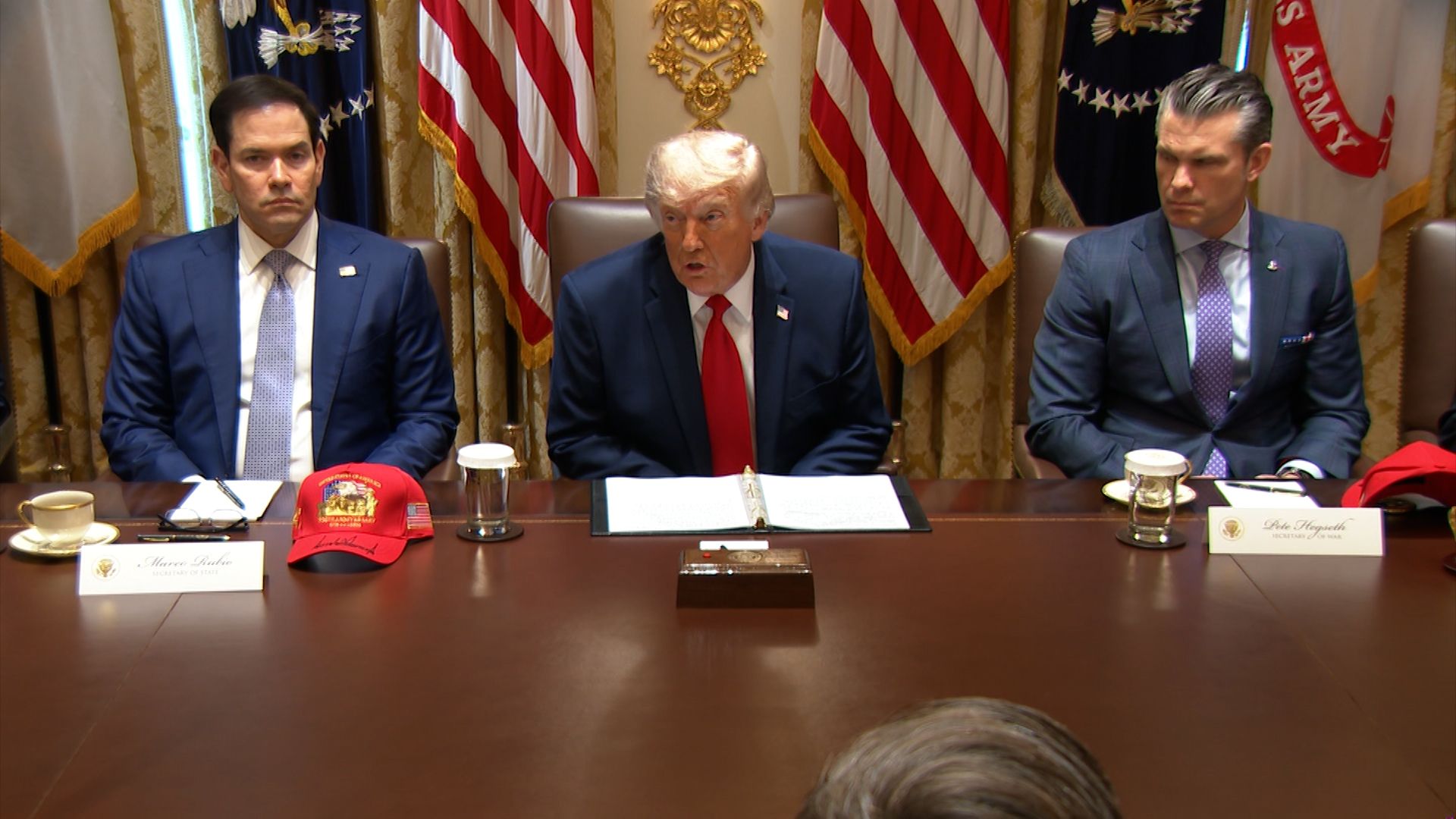
Secretary of State Marco Rubio, speaking from India on Tuesday, said a deal could take “a few days” to finalize, with negotiators in Qatar working through “specific language.” He also conceded what may be the most consequential admission of the entire diplomatic process: that the nuclear question cannot be resolved “in 72 hours on the back of a napkin.” That phrase tells you most of what you need to know about what this deal will and will not be.
The strikes did not stop while the diplomats talked. Late Monday, US forces conducted what Central Command described as “self-defense strikes” in southern Iran near Bandar Abbas, ostensibly targeting boats laying mines. Iran's Revolutionary Guard announced on Tuesday that it had shot down a US MQ-9 Reaper drone over the Persian Gulf. Supreme Leader Mojtaba Khamenei — who inherited the office after his father Ali Khamenei was killed in the opening days of the war — broke his social media silence with a warning that the United States “will no longer have a safe haven for its mischief and for establishing military bases in West Asia.” US Central Command, for its part, confirmed that 108 commercial ships had been redirected under the naval blockade. Both sides are negotiating with one hand and signaling escalation with the other. That is what serious negotiations between adversaries who do not trust each other actually look like.
In Lebanon, the violence has not paused for diplomacy. At least thirty-one people, including children, were killed in Israeli strikes across the south on Tuesday alone. The Israeli military issued forced displacement orders for twenty-one towns and villages, including Nabatieh — a city of roughly a hundred thousand people. Prime Minister Netanyahu announced that Israel was “deepening” its operation and “fortifying” what he called the “security zone” inside Lebanese territory. Hezbollah claimed thirty-two separate operations against Israeli forces the same day. Lebanon's Health Ministry now puts the death toll since March at 3,213 killed and 9,737 wounded.
INSIDE THE DEAL
The reported contents of the memorandum — to the extent they can be reconstructed from leaks across Axios, Reuters, Iranian state media and the briefings of US officials — are narrower than either critics or supporters tend to acknowledge. Iran would clear the mines it deployed in the Strait of Hormuz. Commercial transit would resume. Washington would lift the blockade and issue sanctions waivers permitting Iran to sell oil. The US forces mobilized during the war would remain in the region for the duration of the sixty-day window, withdrawing only if a final agreement is reached.
On the nuclear question — the ostensible purpose of the entire campaign — the language is studiously vague. According to a US official quoted by Axios, Iran has given verbal commitments to “never pursue nuclear weapons” and to negotiate over the suspension of enrichment and the removal of its highly enriched uranium stockpile. The word “disposal,” used in some accounts, was carefully chosen to leave open whether the material would be exported, down-blended inside Iran, or merely placed under additional monitoring. An Iranian government source told Reuters there was “no agreement” on the stockpile at all. Iranian parliamentarian Mohsen Zanganeh clarified on Tuesday what Tehran considers the dividing line: “We do not talk about the principle of enrichment, but we do talk about details, such as the enrichment percentage.”
This is, in substance, an outcome that would have been available without a war. It is roughly the structure of the 2015 Joint Comprehensive Plan of Action that Trump withdrew from in 2018 — minus the verification architecture, the multilateral framework, and the credibility that an undefeated United States once carried into nuclear diplomacy.
Iran has now demonstrated that it can absorb a direct American military campaign and emerge with its nuclear material intact and its bargaining position improved. That is the precedent the next government in any country considering proliferation will study closely.
THE GAPS THAT COULD STILL KILL IT
Three issues remain genuinely unresolved, and any one of them could collapse the framework over the next few days.
The first is the Strait of Hormuz. On 18 and 19 May, Iran's Supreme National Security Council formalized the Persian Gulf Strait Authority — a permanent regulatory body that will require vessels to file ownership documents, insurance, crew manifests and cargo declarations before receiving transit permits. Tehran is not seeking to reopen the strait as it was before the war. It is seeking to convert wartime control into a peacetime institution. Iran's semi-official Tasnim News Agency stated bluntly that the strait would “not return to its pre-war status under any accord.” Gulf states understand exactly what this means: a permanent Iranian hand on the world's most important energy chokepoint, potentially extracting tolls or other concessions in exchange for transit. Whether the United States will accept that — and whether ambiguous language can paper over the disagreement — is the most pressing question of the next seventy-two hours.
The second is Lebanon. Iran has made the linkage explicit and public. Foreign Minister Abbas Araghchi sent a personal message to Hezbollah Secretary-General Naim Qassem reassuring him that Tehran would not abandon its ally. Foreign ministry spokesman Esmaeil Baghaei stated that Tehran's focus is on ending the war “on all fronts, including Lebanon.” Yet Israeli strikes have intensified rather than slowed, and Netanyahu has told his cabinet — and reportedly the US president — that Israel will “maintain freedom of action against threats in all arenas, including Lebanon.” Trump, in earlier ceasefire conversations, appears to have given Netanyahu precisely that assurance. Either Tehran will accept ambiguous language that allows Israel to continue what it calls self-defense operations in Lebanon, or the deal cannot be signed in its current form. There is no third option that anyone has identified.
The third is the nuclear stockpile and what “verifiable” really means. The verbal commitments Iran has reportedly conveyed through mediators carry exactly the legal weight of verbal commitments — which is to say, almost none. The 2015 nuclear agreement included an inspection regime considered the most intrusive in the history of arms control. The framework now being negotiated includes nothing of the kind, at least at this stage. The mechanism for verifying any future Iranian commitments has not been agreed, has barely been discussed, and would in any case fall to a sixty-day follow-on negotiation that has no defined endpoint.
WHAT EACH SIDE ACTUALLY WANTS
Iran's leadership has translated military endurance into negotiating leverage with considerable skill. The regime survived an unprecedented attack — including the loss of its supreme leader — and has used the intervening weeks to consolidate power around the Revolutionary Guards and Mojtaba Khamenei. Tehran's strategy is straightforward: extract maximum economic relief before making any verifiable nuclear concessions, retain the Strait of Hormuz as a permanent institutional tool, and reinforce the message that Iran's regional alliances — Hezbollah above all — are not optional features of Iranian foreign policy but core commitments. The signs of regime confidence are visible. Internet access has been restored after eighty-eight days of near-total blackout. Senior military commanders have appeared together in public for the first time since the war began. The leadership believes the worst has passed.
The Trump administration is in a more difficult position than its public rhetoric suggests. A Center for Strategic and International Studies analysis released on Tuesday confirmed what military planners have known privately for weeks: replenishing the munitions stockpiles expended in the Iran campaign will take years. More than a thousand Tomahawk cruise missiles were fired at Iranian targets; replacement production will not be complete until late 2030. Up to 290 THAAD interceptors were used defending against Iranian retaliation; restoration is projected by the end of 2029. Patriot interceptor stocks will not recover until mid-2029. As the CSIS report put it with unusual directness, “the problem today isn't money; it's time.” This is not a position from which Washington can credibly threaten a second campaign. Trump knows it. Iran knows it. The negotiation reflects that arithmetic.
Israel's position is the most strategically exposed. Netanyahu built his political identity on the proposition that pressure, deterrence and force could ultimately resolve the Iranian challenge. He received what he asked for — full American partnership, B-2 bombers, the works — and the result is a more centralized, more militarized, more nuclear-curious Iran. The doctrine has not been adjusted. It has collapsed. The Israeli intensification of strikes in Lebanon over the past week serves several purposes simultaneously: maintaining military pressure on Hezbollah before the Pentagon talks scheduled for 29 May, signaling that Israel will not be constrained by a US-Iran deal, and giving the prime minister something to point to ahead of an election in which his political opponents are already laying the war's outcome at his door.
The Gulf states — Saudi Arabia, the UAE, Qatar, Oman — have been the most consequential and underreported actors of the past two weeks. Three Gulf leaders persuaded Trump to cancel a planned strike on Iran on 19 May. Qatar co-authored the revised memorandum and hosted Iranian negotiators in Doha. Oman ran a parallel diplomatic track on the Strait. The UAE has begun what Emirati political scientist Abdulkhaleq Abdulla called “cautious and calculated steps to de-escalate tensions with Iran” — a phrasing that captures both the Gulf states' practical accommodation with Iran's regional position and their distrust of where this is all going. None of them, however, will sign on to Trump's reported demand that an expansion of the Abraham Accords be tied to the Iran deal. That idea has been received in Riyadh, Doha and Abu Dhabi as a sign that the White House does not fully understand the region it is trying to reorganize.
THE DETERRENCE PROBLEM NOBODY WANTS TO DISCUSS
Beyond the immediate negotiation, the most consequential strategic outcome of the war may be the one neither government will name in public. For two decades, the credible threat of overwhelming force restrained Iran from openly advancing toward a nuclear weapon. That threat has now been tested. Iran withstood it. The regime is still in place. The enrichment infrastructure has been damaged but not destroyed. The stockpile remains. The missile industry, while degraded, is already being rebuilt, according to a CIA assessment cited earlier this month.
The logic of deterrence is unforgiving: a threat that has been carried out and survived is no longer the same threat. The question Iranian leaders are now in a position to ask — and that, by all evidence, they are asking — is whether the United States and Israel possess either the will or the capacity to do it again. The answer, given the munitions arithmetic, the political costs at home, and the demonstrated limits of an air campaign to produce political change, is closer to no than yes. That conclusion does not require Iran to immediately race for a bomb. It simply changes the calculation about whether and when to do so. And once that calculation has shifted, it does not easily shift back.
SCENARIOS
What happens next will be determined in the coming days, and possibly hours. Four trajectories are plausible. They are not equally likely, and they are not mutually exclusive.
Scenario 1.A framework is signed, and everything difficult is deferred.
This is the most likely outcome. Ambiguous language papers over the genuine disagreements on Hormuz governance and the nuclear stockpile. The strait reopens. Energy prices ease. Trump declares victory. Iran receives sanctions relief and some unfreezing of assets. The sixty-day window opens for negotiations on questions that will, in all likelihood, not be resolved in sixty days or six hundred. Israel continues operations in Lebanon with tacit American acquiescence. Iran rebuilds. This is not a stable equilibrium, but it is a workable one — and the domestic political incentives on both sides increasingly point toward it.
Scenario 2.Talks collapse, and the war resumes.
This remains a serious possibility. The nuclear language proves impossible to settle. Iranian hardliners block the verbal commitments. American hawks pressure Trump to demand more than Tehran is prepared to give. Strikes and counterstrikes accumulate until one side concludes the diplomatic track is exhausted. Trump then faces the choice he deferred on 19 May: resume military operations whose strategic utility is increasingly contested, maintain the blockade indefinitely, or walk away. None is attractive. The economic costs of a prolonged Hormuz closure are now well understood by every party involved. This is the scenario everyone claims to want to avoid — and the one the structural features of the negotiation could still produce.
Scenario 3.A narrower deal, honestly framed.
Perhaps the realistic best case. Hormuz reopens. The blockade lifts. Sanctions waivers are issued. But Lebanon and the nuclear program are explicitly deferred — not buried in ambiguous language but openly set aside for separate, indefinite processes. This is something close to a frozen conflict model. It manages the immediate crisis without resolving the underlying contradictions. It is honest about what has and has not been agreed. Whether either government can sell that honesty to its domestic audience is the open question, and the reason this scenario is less probable than the first.
Scenario 4.Iran moves toward nuclear breakout, slowly.
The darkest scenario, and the one that would not become visible immediately. Whether or not a deal is signed, Iran's leadership concludes that nuclear capability is now the only durable guarantee of regime survival. The conclusion is rational from Tehran's perspective: the regime was targeted for elimination, survived, and has observed the limits of what its adversaries are prepared to do. The enrichment infrastructure can be rebuilt. The expertise has not been lost. International monitoring under the current framework would be thin. Iran could advance toward weapons capability slowly enough to avoid triggering a renewed campaign that, as the CSIS analysis suggests, the United States is not currently positioned to mount. By the time the situation became clear, it might also be irreversible. This is not the most likely outcome of the next few weeks. It may be the most consequential outcome of the next few years.
AN HONEST ACCOUNTING
The ledger that emerges from three months of war is brutal in its clarity. The Iranian regime is intact and more militarized than before. Iran's nuclear material is in place. Hezbollah has been degraded but not eliminated. Lebanon's civilians have paid an enormous price for a strategic outcome that does not exist. The United States has expended munitions it cannot replace for years and has exposed, through the act of using them, the political and material limits of its coercive power. Israel has demonstrated that even unconstrained military force, backed by an American superpower, cannot produce the political result its doctrine promised. The Abraham Accords expansion Trump appears to want is structurally impossible without movement on the Palestinian question that no current Israeli government is prepared to make. The Gulf states are quietly recalibrating toward an accommodation with the Iran they actually have, rather than the one Washington and Jerusalem keep insisting must somehow be replaced.
A deal will probably be signed. It will probably hold for some period of time. It will not resolve the underlying problem. The most that can be said for it is that it averts something worse — and in the Middle East of May 2026, that is what a successful outcome now looks like.