Introduction
The 2026 Gulf crisis represents one of the most quantitatively significant disruptions to the global energy system since the oil shocks of the 1970s and the 2022 Russia–Ukraine war. Within a matter of days, coordinated and retaliatory strikes on critical energy infrastructure have removed double-digit percentages of global supply capacity, triggered price increases exceeding 100% in certain markets, and disrupted one of the world’s most important maritime chokepoints.
The scale of the disruption is measurable across all key dimensions of the energy system. Approximately 20% of global liquefied natural gas (LNG) supply has been affected, oil prices have surged to between $113 and $167 per barrel depending on regional benchmarks, and maritime traffic through the Strait of Hormuz has collapsed by roughly 85–90% compared to normal levels. These developments demonstrate that the crisis is not merely geopolitical but systemic, affecting production, transport, pricing, and consumption simultaneously.
Infrastructure Targeting and the Magnitude of Supply Loss
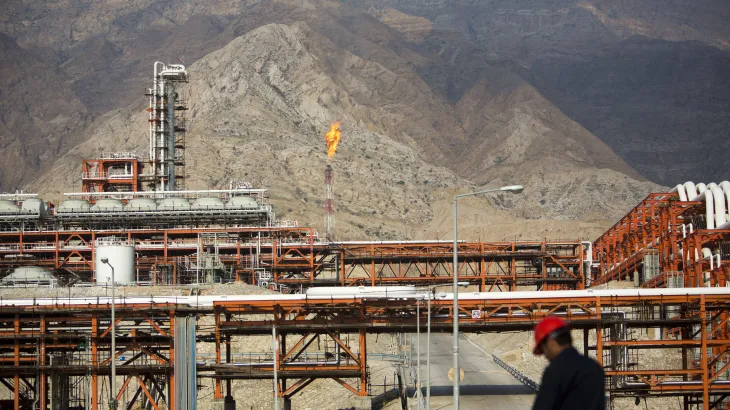
The initial strike on Iran’s South Pars gas field, which accounts for more than 75% of Iran’s domestic gas consumption, marked a critical escalation into upstream energy warfare. South Pars is not only the world’s largest natural gas field but also the backbone of Iran’s electricity generation, industrial production, and residential energy supply. Disruption at this level threatens tens of millions of consumers and multiple industrial sectors simultaneously.
However, the most consequential quantitative shock emerged from the attacks on Qatar’s Ras Laffan Industrial City. This facility alone processes approximately one-fifth of global LNG supply and represents the largest LNG export hub in the world. Iranian missile strikes damaged two of Qatar’s fourteen LNG trains, eliminating roughly 17% of the country’s export capacity. In absolute terms, this corresponds to approximately 12.8 million tonnes per annum of LNG removed from global markets.
The economic impact is equally substantial. QatarEnergy estimates annual revenue losses of approximately $20 billion, with total repair costs reaching $26 billion and recovery timelines extending between three and five years. Additional downstream impacts include a 24% reduction in condensate exports, a 13% decline in LPG output, a 14% decrease in helium production, and a 6% contraction in petrochemical feedstocks such as naphtha and sulphur.
These figures highlight a structural characteristic of the LNG system: extreme concentration. A single industrial complex spanning approximately 295 square kilometres—nearly one-third the size of New York City—serves as a critical node for global supply. The removal of even a fraction of its capacity produces disproportionate global effects.
The Strait of Hormuz and the Collapse of Maritime Throughput
The disruption of production has been compounded by severe constraints on transport through the Strait of Hormuz, through which roughly 20% of global oil and a significant portion of LNG flows transit under normal conditions. Rather than imposing a total blockade, Iran has implemented a system of selective maritime control that has reduced effective throughput to a fraction of its normal levels.
Between 15 and 17 March, only 15 vessels were recorded transiting the strait, compared to typical daily volumes exceeding 100 ships. This represents a reduction of approximately 85–90% in traffic. Of these transits, around 90% were linked to Iranian or aligned trade, indicating a near-complete exclusion of Western-affiliated shipping.
Access to the strait is now conditional upon prior approval, with shipowners required to submit detailed ownership and cargo information. Reports indicate that at least one tanker paid approximately $2 million for transit authorization, effectively transforming the strait into a controlled and monetized corridor. This system allows Iran to maintain partial flows while exerting maximum leverage over global supply chains.
Market Dislocation and Price Escalation
The quantitative impact on global energy markets has been immediate and severe. Natural gas prices in Europe increased by approximately 30% within hours of the Ras Laffan strikes and have more than doubled since the onset of the conflict. Oil markets have also experienced sharp increases, with Brent crude rising to approximately $113 per barrel, while regional benchmarks have diverged significantly.
Oman crude has surged to approximately $167 per barrel, while Dubai crude has reached around $137, reflecting the heightened risk premium associated with Gulf-origin supplies. In contrast, US benchmark West Texas Intermediate (WTI) remains comparatively lower at approximately $97 per barrel. The resulting Brent-WTI spread has reached its widest level in more than eleven years, indicating a significant fragmentation of global oil markets.
This divergence is closely linked to structural changes in US energy dependence. US imports from the Persian Gulf have declined to approximately 500,000 barrels per day, compared to around 2 million barrels per day less than a decade ago. At the same time, US production has reached approximately 13.7 million barrels per day, representing an increase of roughly 145% since 2003. The United States has also transitioned from a net importer of approximately 400 million barrels per quarter in 2006 to a net exporter of approximately 100 million barrels per quarter in 2025.
Cascading Effects on Financial Systems and Consumption
The energy shock has rapidly propagated into financial markets and macroeconomic indicators. Equity markets have declined, with indices such as the FTSE 100 falling by more than 2%, while government bond yields have risen sharply amid inflationary pressures. In the United Kingdom, wholesale gas prices have exceeded 150 pence per therm, contributing to increased household energy costs and mortgage rates.
The disruption has also triggered significant market inefficiencies, with LNG cargoes being resold multiple times and rerouted across continents. Strategic petroleum reserve releases have been initiated, including coordinated actions by the International Energy Agency, yet these interventions have not been sufficient to stabilize prices. The persistence of elevated prices reflects both physical shortages and systemic uncertainty.
At the consumption level, the crisis has forced adjustments across multiple regions. In Asia, which accounts for approximately 90% of Qatari LNG exports, industrial users are switching to oil-based fuels where possible. Fertilizer production, heavily dependent on natural gas, is being reduced in several countries. In vulnerable economies such as Pakistan and Bangladesh, reliance on spot LNG markets has made it increasingly difficult to secure affordable supply, exacerbating energy poverty and economic instability.
Energy Transition Reversal and Structural Fragility in Europe
The crisis has had immediate implications for energy policy, particularly in Europe. In Germany, coal-fired power generation has increased by approximately 2 percentage points compared to February levels, while gas-fired generation has declined by more than one-third. This shift reflects the relative cost differential, with gas estimated to be approximately 30% more expensive than coal for electricity generation.
These figures illustrate the fragility of Europe’s energy transition strategy, which relies on natural gas as an intermediary between coal and renewable energy. Under conditions of supply disruption and price volatility, this model becomes economically unsustainable, forcing a reversion to more carbon-intensive energy sources. Although seasonal factors such as reduced demand in spring may moderate this trend, the structural vulnerability remains evident.
Expansion of Targeting to Refining Infrastructure
The conflict has also expanded into refining capacity, further amplifying supply risks. In Kuwait, drone strikes targeted two major refineries—Mina al-Ahmadi, with a capacity of approximately 346,000 barrels per day, and Mina Abdullah, with a capacity of around 454,000 barrels per day. Combined, these facilities account for approximately 800,000 barrels per day of refining capacity.
In Israel, the Haifa refinery, which processes approximately 197,000 barrels per day, supplies between 50% and 60% of the country’s fuel needs, including around 60% of diesel and 50% of gasoline. Given that Israel operates only two refineries, disruption at Haifa represents a significant threat to national energy security, affecting transportation, aviation, and military operations.
Conclusion
The 2026 Gulf crisis demonstrates that the global energy system operates with limited redundancy and high structural concentration. The removal of approximately 12.8 million tonnes of LNG supply, the reduction of maritime throughput in Hormuz by up to 90%, and the surge in oil prices to as high as $167 per barrel collectively illustrate the scale of the disruption.
At the same time, the crisis has revealed deep asymmetries in resilience, with the United States largely insulated due to high domestic production, while Europe and Asia face significant exposure due to import dependence. The resulting market fragmentation, policy reversals, and economic pressures highlight the systemic nature of the shock.
Ultimately, the quantitative evidence underscores a broader transformation: energy infrastructure, maritime chokepoints, and global markets are now tightly interconnected components of geopolitical conflict. Disruption at any one point can generate cascading effects across the entire system, redefining both the nature of warfare and the foundations of global economic stability.