The first fortnight of August produced less fighting between the United States and Iran than any comparable period since the war began on 28 February, and more consequential activity than most. Almost none of that activity was military. Iran spent the two weeks staffing and defending an administrative body that issues transit permits for the Strait of Hormuz and collects payment for them. The United States spent the same two weeks tightening a naval blockade it has begun describing as indefinite, promising financial measures its Treasury secretary says have “never been seen,” rotating a carrier group into the theatre, and — on 14 August, in remarks at a training centre in Garden City, New York — floating the idea that the strait might be declared American territory once Iran is defeated. Oil, meanwhile, fell.
The temptation is to read the quiet as progress toward a settlement, or the rhetoric as a prelude to renewed bombing. Neither reading fits the fortnight well. What the period actually shows is a war that has changed instruments. Both governments have largely stopped trying to alter the situation by force and have begun trying to alter it by administration — permits, forms, fees and jurisdictional claims on one side; interdiction, sanctions and market isolation on the other. This is not a lull between rounds of combat. It is the war being fought by other means, and those means have a logic, a tempo and a set of failure modes quite different from the ones that governed the campaign through July.
A fortnight in which very little was decided by force
The kinetic record of 1–16 August is thin, and more importantly, inconsequential. No American strike inside Iran was confirmed on any night between 2 and 9 August, the longest sustained pause since the June memorandum collapsed. What violence there was occurred at sea and in small increments: a bulk carrier struck northeast of Khasab on 3 August; a vessel belonging to Abu Dhabi’s ADNOC reported targeted by a missile while crossing the strait on 8 August, which the UAE characterised as an act of piracy; explosions heard on Qeshm Island on 6 August that Iranian state media attributed to a confrontation with “hostile enemy targets” and that a Hormozgan provincial official then denied had occurred at all; and a further reported strike on a ship around 15 August. Iran seized two cargo ships at some point in the blockade’s course, according to accounts that remain difficult to verify independently.
Set against the thirteen consecutive nights of American bombing in late July, this is a different war. More to the point, none of these incidents moved either party’s position. The ADNOC strike did not produce an Emirati military response; the Qeshm episode may not have happened; the pause did not yield a signature. Violence in this phase functions as punctuation rather than argument — it signals that the capacity for coercion still exists without being expected to change anyone’s mind.
That is a meaningful shift, and it is worth stating plainly rather than treating as an interlude. Through the spring and early summer, both governments behaved as though the disposition of the Strait of Hormuz would be settled by whoever could impose more cost. By August, both were behaving as though it would be settled by whoever could establish the more durable administrative claim over it.
Tehran’s instrument: a permit regime
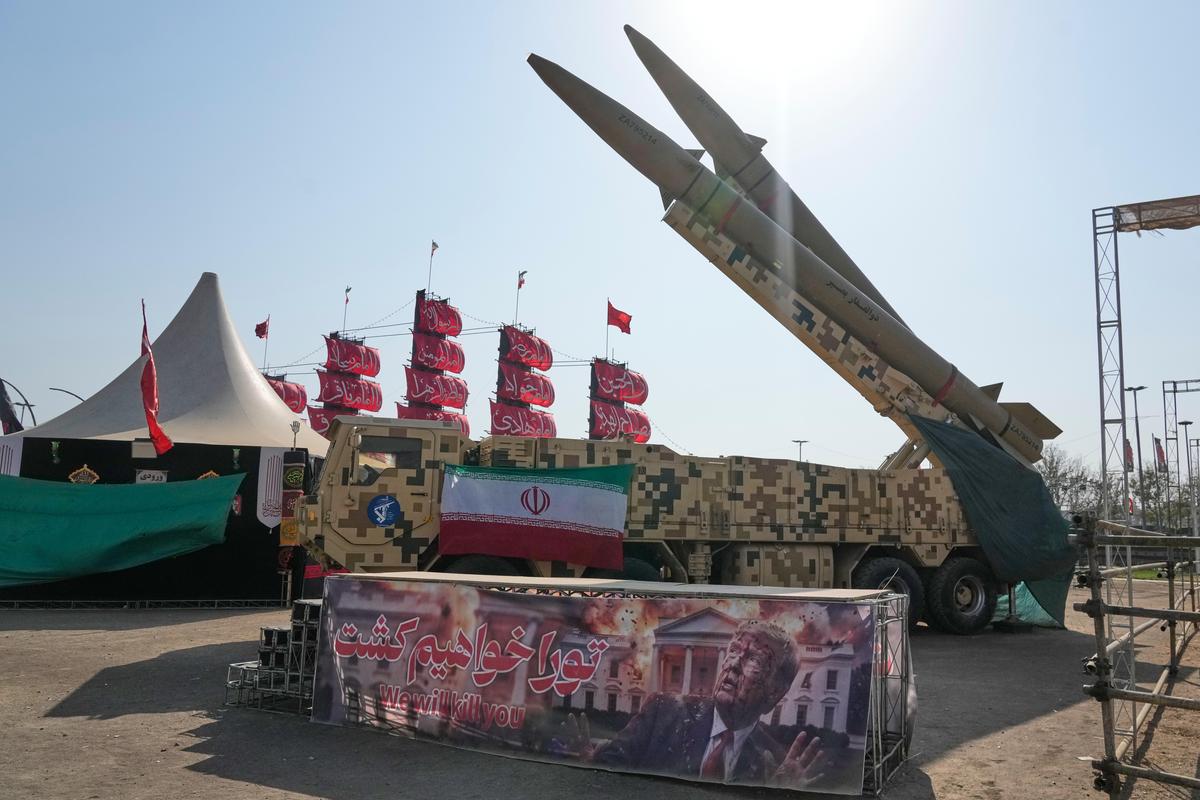
Iran’s principal exhibit is an institution that has attracted far less attention than it merits. On 5 May, Tehran announced the creation of the Persian Gulf Strait Authority, a body charged with managing transit through Hormuz. It is not a rhetorical construct. The Authority has delineated a controlled maritime zone — bounded, on Iran’s account, by a line from Kuh-e Mubarak to a point south of Fujairah at the eastern entrance, and by a line from the tip of Qeshm Island to Umm Al Quwain at the western entrance. Vessels intending to transit are required to coordinate with the Authority and obtain authorisation in advance. The application asks for detailed ownership, insurance, crew and cargo information, submitted before payment.
Through the first half of August, that machinery was extended outward. Negotiations with Oman, running for more than three weeks by the second week of the month, produced agreement on the coordinates of inbound and outbound shipping lanes and, according to multiple reports, a proposed joint coordination centre to manage traffic and collect vessel information. Reporting has described a fee structure whose proceeds would be divided equally between the two states. On 11 August, Iranian foreign ministry spokesman Esmaeil Baghaei said publicly that fees ought to be charged for maritime services rendered in the strait — safe shipping, environmental protection, security, the suppression of maritime crime — while adding that detailed fee negotiations were not under way at that stage. Draft legislation on the fee schedule sits with the Majles.
Two features of this deserve emphasis, because they are easily missed. The first is that a permit regime is a fundamentally different kind of claim from a blockade or a mining campaign. It does not seek to stop traffic; it seeks to condition traffic on recognition. Every completed form is an acknowledgment of jurisdiction, and jurisdiction, unlike a minefield, is not cleared when the shooting stops. The second is that this design requires the ships to keep coming. A state that closes a waterway needs nothing from the world; a state that licenses a waterway needs functioning global trade, insurers willing to underwrite the transit, and a legal characterisation robust enough that payment does not itself breach sanctions. Whatever else it is, this is not the posture of a country withdrawing from the international economy.
It is also contested inside Iran. The Islamic Revolutionary Guard Corps has publicly disclaimed the Oman track, and the Authority’s own statements have run harder than the diplomats’: in mid-August it maintained that the strait remains blocked and will not reopen until Iran’s conditions are accepted. Foreign Minister Abbas Araghchi’s position on 8 August — that agreement with Oman was “very close” but that full reopening depended on Washington honouring June commitments it had violated — describes a technical arrangement and a political one moving on separate tracks.
Washington’s instrument: an indefinite blockade
The American answer is symmetrical in form even where it is opposite in intent. Having reimposed the naval blockade of Iranian ports on 14 July, US Central Command spent August publishing the tally: 35 commercial vessels redirected as of 2 August, 55 by 9 August, 59 by 12 August, with three vessels disabled and two boarded for inspection. These are one party’s figures and have not been independently audited; Lloyd’s List has separately reported vessels bypassing the cordon. Tanker-tracking firms cited in mid-August assessed Iranian oil exports as having stopped entirely, an assessment carried prominently by outlets aligned with the Iranian opposition and therefore worth treating with the usual care, though it is consistent with the direction of the blockade if not necessarily its precise magnitude.
The framing hardened alongside the enforcement. On 12 August President Trump described the blockade on Truth Social as a “steel wall” that Iran could do nothing to counter, and insisted the United States retains control of the strait. Treasury Secretary Scott Bessent said Washington would apply measures to Iran that had “never been seen.” The USS George Washington carrier group, having completed a port visit in Vietnam on 5 August, was reported en route to relieve the USS Abraham Lincoln. Reuters reported on 12 August that efforts to revive the June interim agreement had produced no breakthroughs. Then came the 14 August remark about declaring Hormuz American territory “pretty soon,” after Iran’s defeat.
Read as a war aim, that statement is difficult to interpret; the strait is an international waterway bounded by Iranian and Omani territorial seas, and no mechanism exists by which a third state could annex it. Read as an administrative claim, it is more legible, and more revealing. It is the mirror image of the Persian Gulf Strait Authority: an assertion that the passage is governed by whoever says it is governed, backed by whoever can enforce the saying. Washington’s stated objective through the spring — restoration of a pre-war arrangement in which no party controlled the lanes — has quietly given way to a competing claim of control. That is a substantive change in the American position, and it happened without being announced as one.
The market stops listening
The clearest evidence that the war has changed character comes from the one participant with no stake in the rhetoric. On 13 August Brent settled around $87.20 a barrel, down roughly two per cent on the day, with WTI at $81.45 — this in a week that produced no diplomatic progress whatever, an indefinite blockade, and a presidential claim on the waterway itself. In July, Brent had passed $100.
Transits remain far below the pre-war norm of roughly 130 to 140 crossings a day, and the International Energy Agency warned during the period that global stockpiles were drawing down rapidly. But the price is no longer tracking the conflict. It is tracking inventories, Chinese reserve drawdowns and rising American production. Traders have, in effect, priced the closure as a structural condition rather than an event — which is what one does with an administrative arrangement, and not what one does with a war.
This decoupling has a political consequence that cuts against both capitals. The oil price was the mechanism by which the war imposed costs on third parties, and through them on Washington. If crude can sit in the eighties with Hormuz constrained and Iranian exports at or near zero, then the economic clock that was widely expected to force a settlement is running considerably slower than it was six weeks ago. Neither side is now under acute market pressure to concede.
Institutions, not outcomes
The fortnight’s other developments follow the same pattern. On 7 August in Mecca, Saudi Arabia, Turkey and Pakistan signed a trilateral defence agreement whose signatories describe it as open to other regional states; assessments have been careful to note it is a framework for coordination rather than an operational alliance. On 9 August, President Masoud Pezeshkian issued the decree appointing Mohsen Rezaei — 71, IRGC commander from 1981 to 1997, secretary of the Expediency Discernment Council for more than two decades, vice-president for economic affairs from 2021 to 2023 — as secretary of the Supreme National Security Council, following Mohammad-Bagher Zolghadr’s resignation and Rezaei’s designation as the Supreme Leader’s representative on the same body.
Neither event ends anything. Both create structures intended to outlast the present crisis. The pattern across the fortnight is consistent: in Tehran, in Riyadh and in Washington, actors spent August building institutions rather than seeking outcomes — and doing so while the question the war was ostensibly about remains formally unresolved.
Assessment
The most useful way to read 1–16 August is that the contest over Hormuz has migrated from the domain where wars are settled to the domain where they are administered, and that this migration has happened faster than either side’s declaratory policy has acknowledged. Iran is building a licensing authority; the United States is building a cordon; each is claiming jurisdiction over the same water; and the shipping industry — which wrote to the UN Secretary-General and the International Maritime Organization on 3 August opposing any toll regime — is the constituency whose compliance will actually determine which claim holds.
This has two implications worth stating carefully. The first is that a ceasefire would not resolve it. There is no armistice for a permit regime, and no negotiated end to a blockade that has been redescribed as a permanent feature. Whatever instrument eventually ends the fighting will leave the jurisdictional question intact unless it addresses it directly, which no draft on the table currently does.
The second is that both administrative regimes are self-undermining in the same way. A permit system requires occasional enforcement against vessels that do not comply, and enforcement means shooting at ships — which is precisely the thing that prevents the normal traffic the fee regime needs in order to generate anything. A blockade calibrated to eliminate Iranian exports entirely removes Tehran’s remaining commercial interest in an open strait, and with it whatever incentive Iran retains to make its own regime function as advertised. Each side’s instrument, pressed to its logical conclusion, destroys the conditions its own strategy depends on.
Three things will indicate which way the next fortnight breaks. The first is whether any vessel is publicly known to have transited under a Persian Gulf Strait Authority permit and paid for it, since a licensing regime nobody uses is a press release, and one that shippers quietly comply with is a fait accompli. The second is whether Washington’s blockade figures continue to rise while Lloyd’s List continues to report vessels bypassing it, because the gap between those two series is the real measure of American control. The third is whether the nuclear file re-enters the conversation at all: the IAEA has conducted no verification in Iran since 28 February, the roughly 440 kilograms of 60 per cent enriched uranium reported before the war remain unaccounted for by any independent body, and a war now being fought over transit permits has left its most consequential question entirely unattended.