Publications
Assessments · Analysis121 publications
The Shenzhen Trilateral: What the US–China–Russia Summit Did, and Did Not, Change
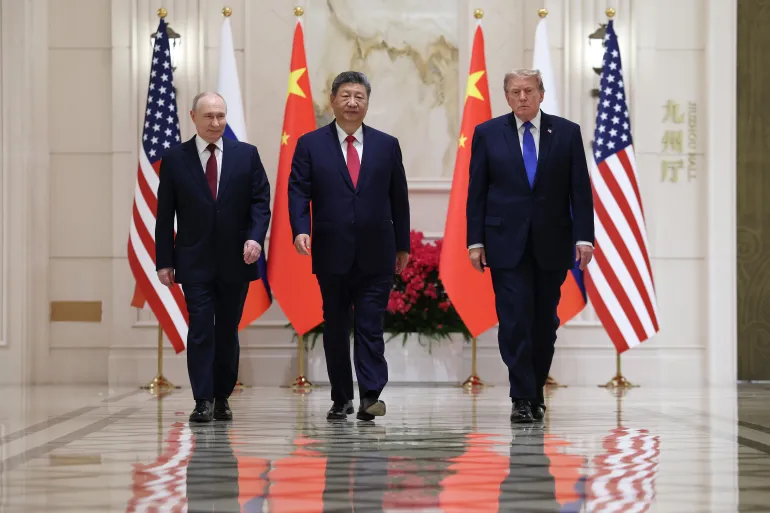
On 19 November 2026 the leaders of the United States, China and Russia met together for the first time, on the sidelines of APEC in Shenzhen. Their four-point declaration is thin on substance, but the meeting itself signals a shift toward great-power management of world affairs that carries real consequences for smaller states, for international institutions and for the wider global order.
Online scam issues in Central Asia and what can be learned from the Southeast Asia
Nowadays online scam and its varieties are becoming frequent headaches for not only state authorities and banks but also ordinary citizens of Central Asia and beyond. In today’s globalized realities, Central Asian scam criminal groups have been replicating from Southeast Asian scam industry.
From Central Asia to Caspian: Azerbaijan’s Integration in Regional Geopolitics
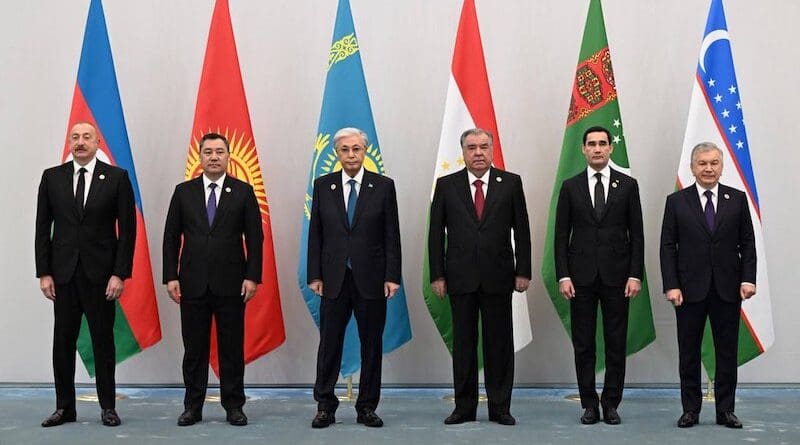
The expansion of the Central Asian consultative format to include Azerbaijan (which will take the Chairmanship for 2027) creates new opportunities for regional connectivity, economic integration and strategic diversification. Its long-term significance, however, will depend on whether political commitments translate into functioning transport networks, joint industries and measurable economic benefits.
India in Central Asia: Strategic autonomy in Eurasia’s changing geopolitics?
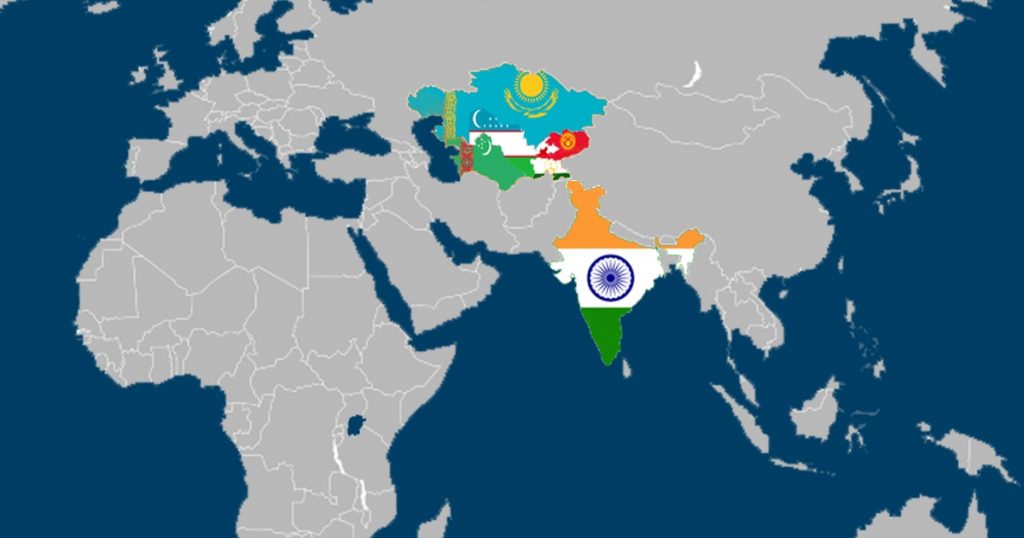
India’s engagement with Central Asia is increasingly acquiring a security dimension that goes beyond traditional military cooperation. Geography, the instability emanating from Afghanistan, terrorism, drug trafficking, cybercrime and the changing balance of power in Eurasia have created a broad convergence of interests between India and the Central Asian republics. At the same time, the region is navigating an increasingly complex geopolitical environment shaped by Russia, China, the United States and the European Union. For India, this makes Central Asia not merely an extended neighbourhood, but an important component of its wider Eurasian strategic outlook.
The Guarantor Steps Back: the Gulf states after American primacy
America has stopped acting as the Gulf's security guarantor. With Hormuz, the East-West pipeline and Bab al-Mandab all closed or struck by Iran or its allies, the Gulf states are left with no bypass and no protector.
The Saudi Kingdom Has No Way Out
Saudi Arabia built two routes out of a war zone and lost both within eleven days. This assessment traces how a thirty-year hedge against the Strait of Hormuz collapsed into a single, indefensible point of failure.
The Houthis Close the Gate
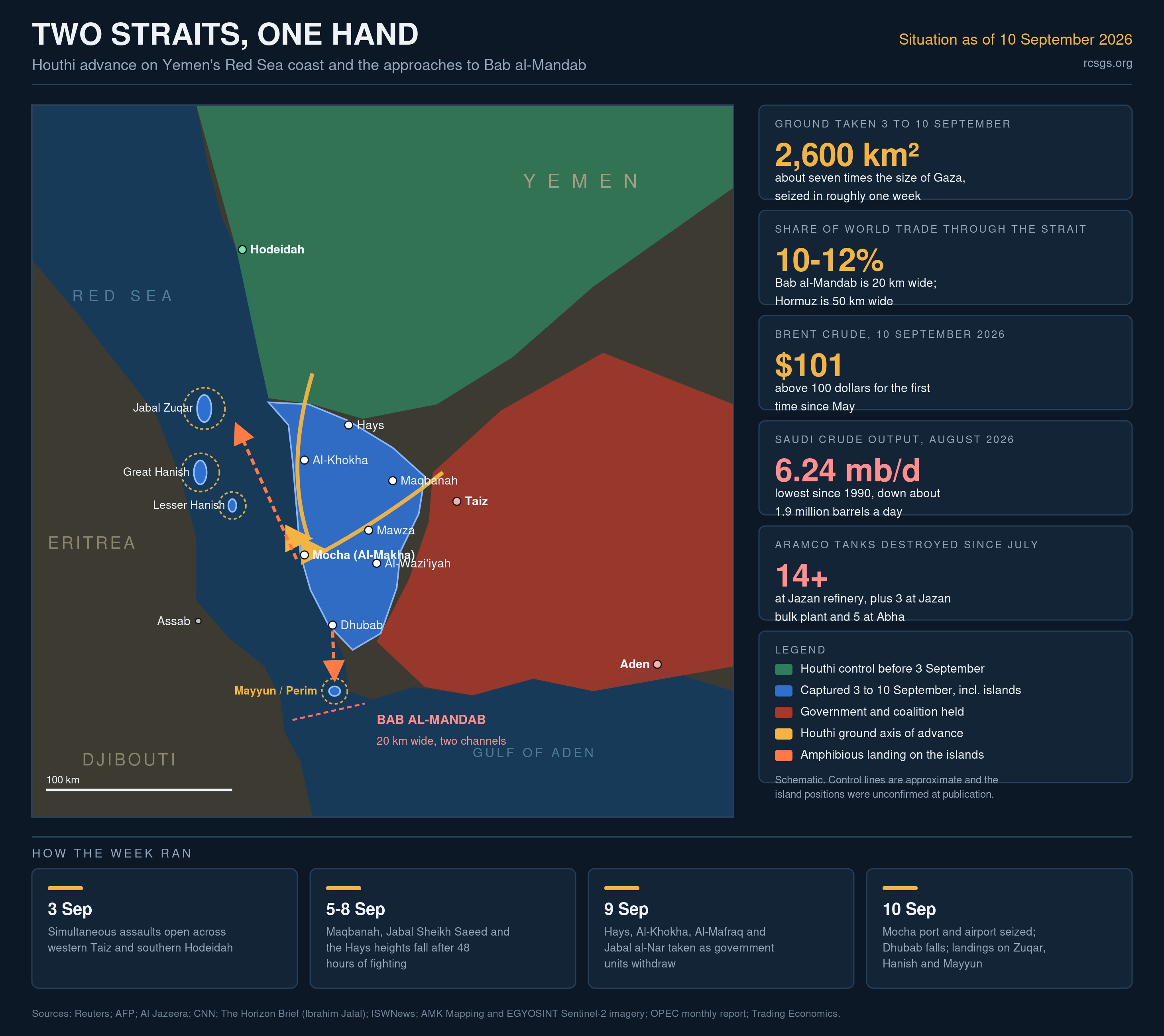
On the morning of 10 September 2026 the Houthi forces, who call themselves Ansar Allah, entered the port city of Mocha on Yemen’s Red Sea coast and took the port and the airport without a serious fight, because the Saudi backed government forces holding the city had already withdrawn during the night. Three Yemeni government sources confirmed the loss to Reuters, and the government itself said nothing for most of the day, which in this war is usually the clearest confirmation of all. Mocha was not an ordinary town. It had been in the hands of the anti Houthi coalition since early 2017, it was the main military and logistical base of Tariq Saleh’s National Resistance Forces on the western coast, and before that it had served as a base for the United Arab Emirates. Losing it removes the last significant government anchor on the Red Sea, and it sits between sixty and seventy five kilometres north of the Bab al-Mandab strait.
Putin's Three-Day Favour
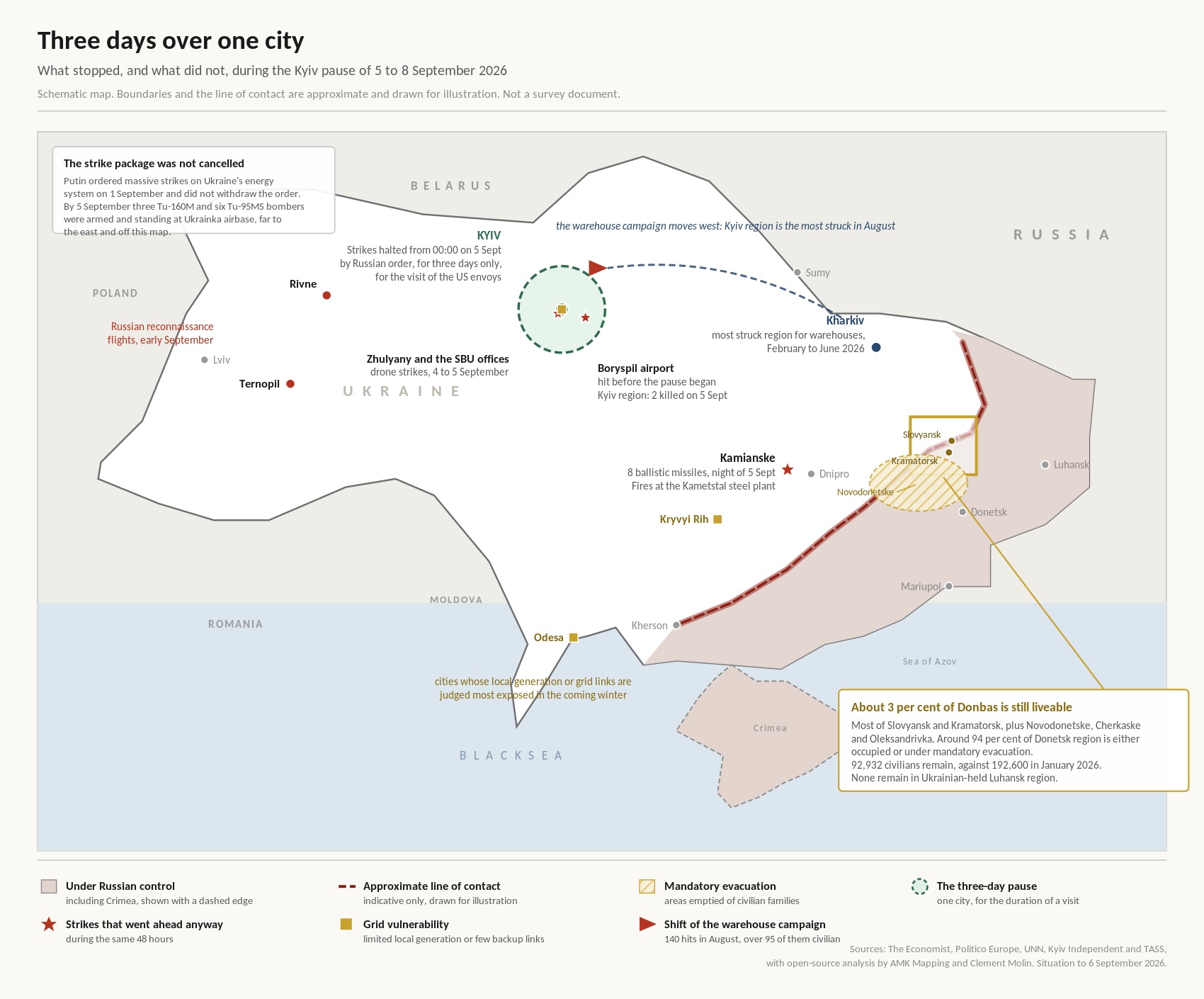
On the evening of 5 September 2026 the American envoys Steve Witkoff and Jared Kushner sat down with Vladimir Putin in the Kremlin, and the meeting ran for more than three hours. Before it began, the Russian president made a point of telling his guests that Kyiv had not been struck since midnight. It was offered as a gesture of good faith, and much of the reporting that followed described it as a ceasefire. It was not a ceasefire. It was a decision to stop hitting one city for three days, taken for the duration of a visit, and everything that lay outside that narrow line continued exactly as before. The distinction matters more than it might appear, because the shape of the pause tells us a great deal about how Russia understands the war, what it is willing to trade, and what it is not.
Russia-Ukraine: The War Turns to Strangulation
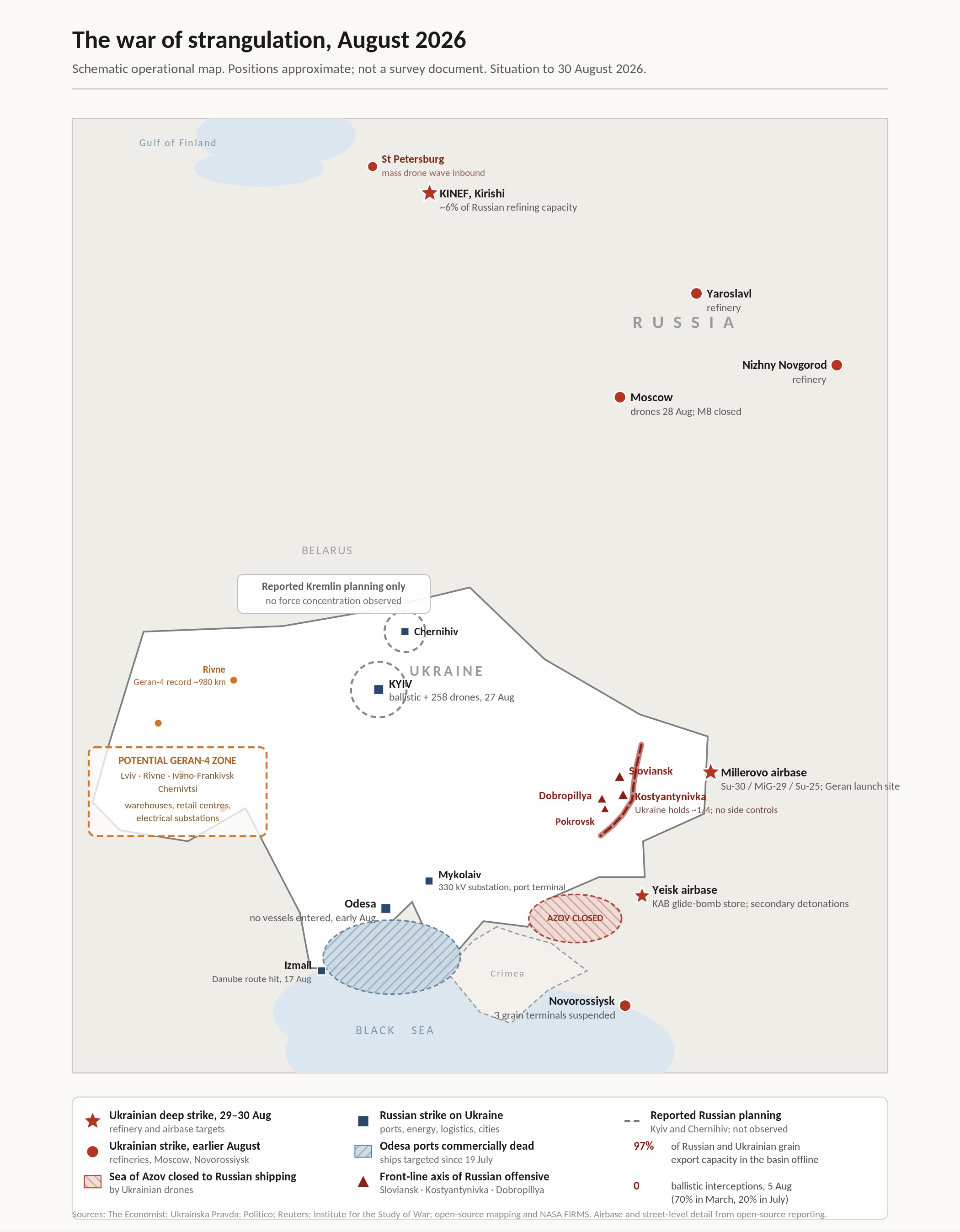
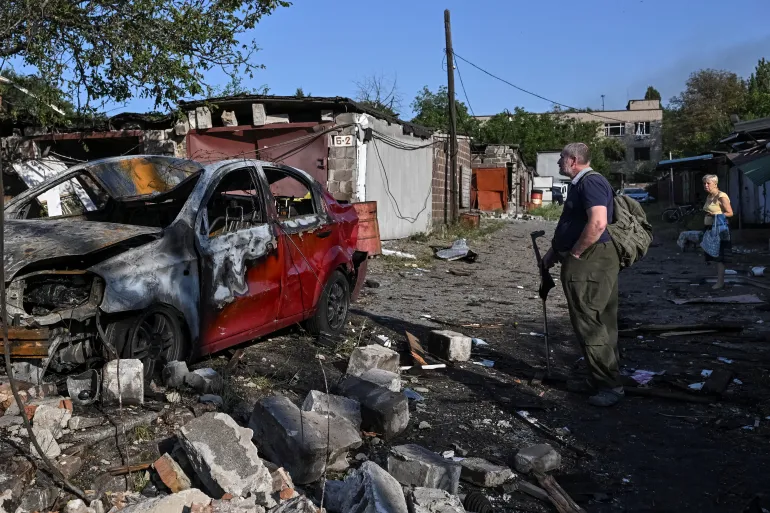
The war has changed shape. Neither side can move the front line in any way that decides the outcome, so both have shifted their main effort to destroying the other’s economy from the air and at sea. Russia is closing Ukraine’s sea exports by attacking merchant ships rather than ports. Ukraine is burning Russian refineries and airbases at ranges that now reach the Gulf of Finland. Two developments in the last forty-eight hours matter more than anything else in this report. Ukraine struck the KINEF refinery at Kirishi in Leningrad Oblast, which is one of the largest refineries in Russia, and it did so as part of a mass attack reaching towards St Petersburg. At the same time Ukraine disclosed intelligence that the Kremlin has ordered its military to prepare ground offensives against Kyiv and Chernihiv. The two facts point in opposite directions, and holding both is the analytical problem of the moment. Ukraine is inflicting deeper damage on Russia than at any previous point in the war, while simultaneously warning that Russia is preparing to widen it. A note on sources appears at the end, because the material for this period comes in three very different tiers and they should not be read alike.
The Russia-Ukraine War: Battlefield Developments, August 1–15, 2026
Two and a half years into Russia's full-scale invasion, and roughly ten weeks into its 2026 spring-summer offensive, the front line barely moved in the first half of August. Ukraine's DeepState monitoring group recorded Russian net gains of about 36–88 km² in July (estimates vary because of reporting lag), a rate of advance of roughly 1.2 km² per day — glacial by any measure, and a pace the Institute for the Study of War (ISW) says has produced no operationally significant breakthrough despite Russia's stated ambition of enveloping Ukraine's "Fortress Belt" cities in Donetsk Oblast from the southwest via the Pokrovsk and Dobropillya axes. That slow crawl came at a steep price. Ukraine's General Staff put Russian losses in July at roughly 42,900 killed and wounded, the highest monthly figure of 2026 and among the costliest months of the war. These are Kyiv's own figures and cannot be independently verified — a caveat worth stressing, since neither side publishes reliable casualty data and both have incentives to shade the numbers. Independent OSINT trackers, including the pro-Ukrainian account AMK Mapping, cited similar figures (around 43,000) while noting it was the second-worst month for Russian losses since January 2025. Russian-aligned commentators, such as the podcast Russians With Attitude, have pushed back on the reflexive trust some place in Ukrainian General Staff numbers — a fair point of methodological skepticism that applies to battlefield claims from both sides.
The War Moves Off the Battlefield
Between 1 and 16 August the United States and Iran barely fought, and neither moved. What changed instead were the instruments. Tehran extended the reach of the Persian Gulf Strait Authority — permits, forms, fees, a proposed coordination centre with Oman — while Washington tightened a naval blockade it has begun describing as permanent and floated declaring Hormuz American territory. Brent fell to $87 regardless. RCSGS examines a war that has migrated from the battlefield to the filing cabinet, and why both administrative regimes undercut themselves.
Inside the Hormuz Arrangement
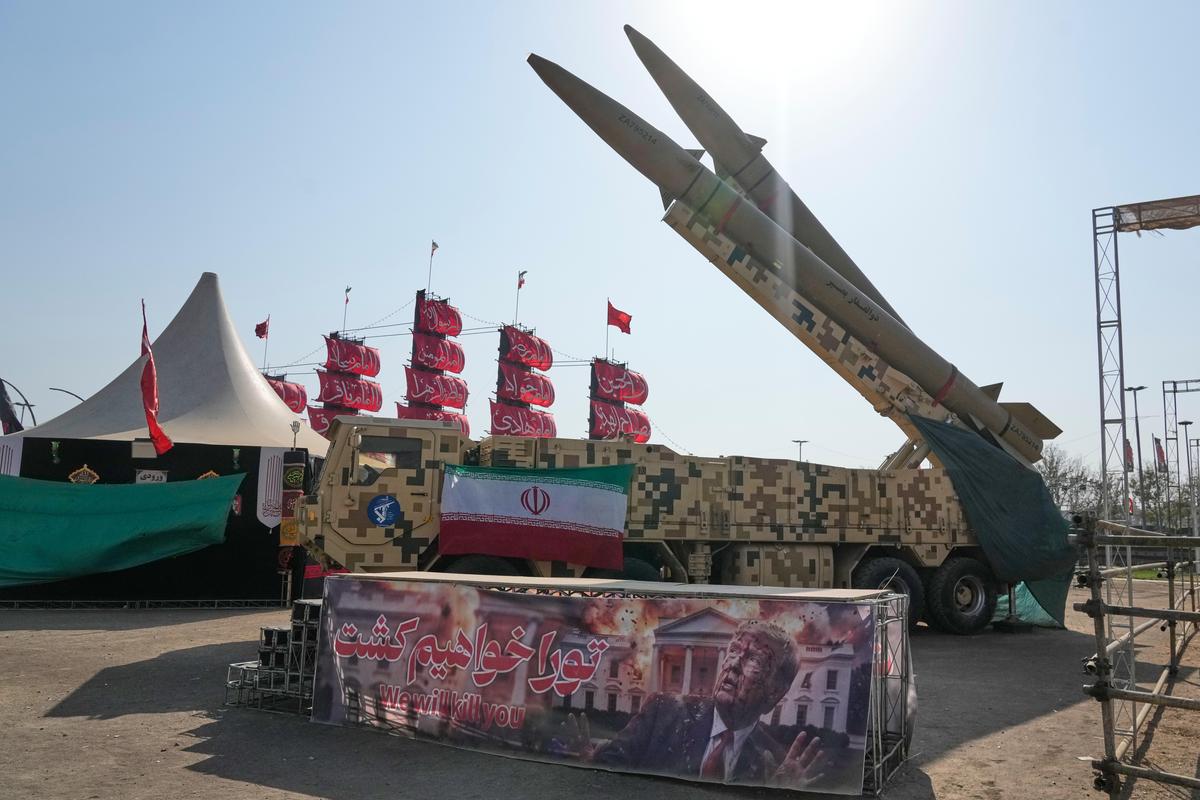
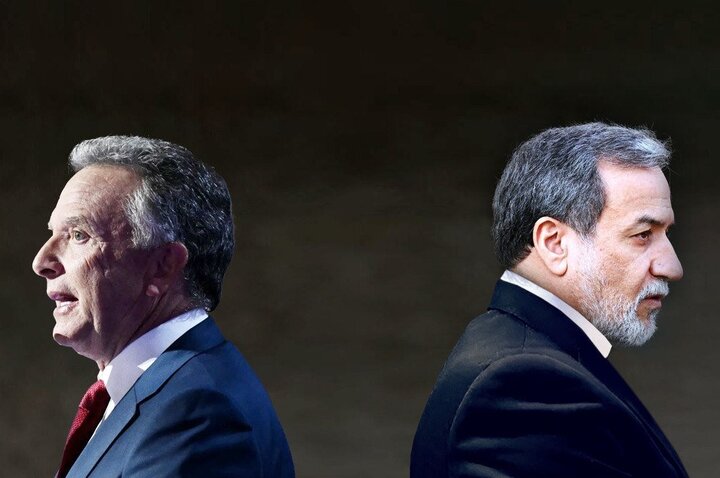
The week of 2 to 9 August was the quietest of the war and, for that reason, the most consequential. no American strike inside Iran was confirmed on any night of it, the first sustained pause since the June truce collapsed, and into that silence stepped something the conflict has not produced in five and a half months: an actual text. Iran and Oman agreed on the coordinates of shipping lanes through the Strait of Hormuz, a draft arrangement moved from the two foreign ministries into Iran's parliament, and by Thursday President Trump was telling reporters in the Oval Office that "the war's got to end pretty soon" and that he did not think Iran "can go much longer." Yet by Saturday the secretary of Iran's Supreme National Security Council had published a list of conditions for reopening the strait so expansive that it reads less like the price of a shipping agreement than the price of the war itself, and on Sunday Foreign Minister Abbas Araghchi ruled out direct talks with Washington for the time being. The gap between those two facts — a technical arrangement all but finished, and a political precondition list that has grown rather than shrunk — is the story of the week. What follows sets out what is actually in the Hormuz arrangement, who has to approve it, why Washington cannot accept it as reported, and what the markets made of the whole thing.